Building on experience
Lederne had already run mentoring programmes for two years when TEAM NORSO became involved.
Experience from the previous programmes showed the potential of the mentoring scheme, but Lederne wanted a more effective format and clearer professional content.
TEAM NORSO outlined the possibility of developing a tailored programme based on the organisation’s needs and previous experience. This became the starting point for the 2026 mentoring programme.
The aim was to make the mentoring relationship more than a series of good conversations between two people. Mentors would gain a professional foundation, participants would receive structure and tools, and the programme would support development both within the mentoring pairs and across the group.
12 mentors and 12 mentees
The 2026 programme comprised 12 mentors and 12 mentees.
Mentors were interviewed before the programme began. This provided a clearer understanding of their motivation, expectations and what each person could contribute as a mentor. Mentors and mentees were then matched.
The considerations included:
- geographical location
- industry
- motivation
- mentees’ own preferences
- background and expertise
Participants’ preferences carried considerable weight. Some mentees had very specific expectations of the type of mentor they wanted, so matching involved both prioritisation and professional judgement.
Preparing the mentors first
The first in-person gathering was for mentors only. This was a deliberate choice. Before supporting others, the mentors would explore their role and develop the skills and tools they would use.
The rest of the programme included:
- separate online sessions for mentors
- a separate online session for mentees
- an in-person gathering for both groups
- a joint online session
- a final in-person gathering
At the final in-person gathering, mentees completed their part after the first day. In total, the 2026 programme consisted of three in-person and three online gatherings.
Between gatherings, the mentoring pairs worked independently, using the tools, methods and skills they had gained through the programme.
TEAM NORSO’s role
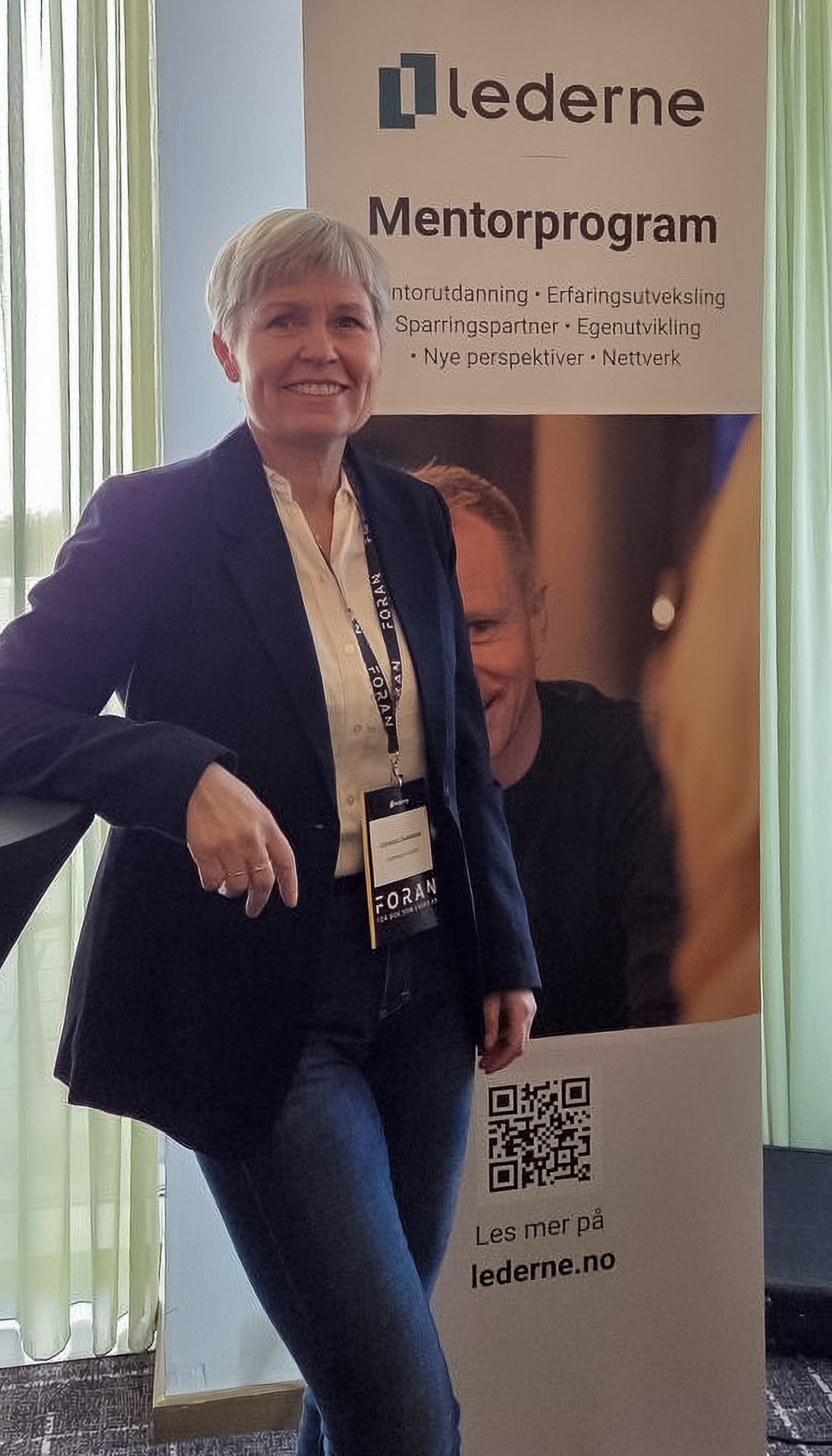
Svein Erik Haugan
Programme Lead
His responsibilities included developing the structure, coordination, admissions, matching and delivery.
Christina Stokkeland
Professional Lead and External Senior Adviser
She played a central role in developing the mentors’ skills and delivering the gatherings.
The evaluation
The evaluation following the mentor gathering on 27 and 28 August 2026 received 20 responses.
The open responses highlighted the combination of theory and practical tasks, a safe learning environment, the gatherings and time spent together, continued development for both mentors and mentees, and Christina Stokkeland’s professional contribution.
Source: “Evaluation of the mentor gathering, 27–28 August 2026”.
The programme continues and expands in 2027
Lederne has chosen to continue the mentoring programme in 2027. The core structure will be retained while the programme is developed further.
The main change is one additional online gathering. Both mentors and mentees will also be interviewed before the start. In 2026, only mentors were interviewed.
This will provide a stronger basis for admissions, clarifying expectations and matching.
Structure around the relationship
For TEAM NORSO, a mentoring programme involves more than connecting people. Structure, clear expectations, mentor development, matching, follow-up and evaluation influence what participants gain from the relationship. Experience from 2026 is now being used to develop the programme further with Lederne for 2027.