
THE TEAM NORSO JOURNAL
Two disciplines.
One resilient organisation.
Choose the perspective most relevant to your work: better people decisions or stronger leadership and teams.
01 / PEOPLE DECISIONS
Resilient Recruitment
Practical thinking on analysis, selection, structured interviews and onboarding—helping organisations make better decisions that last.
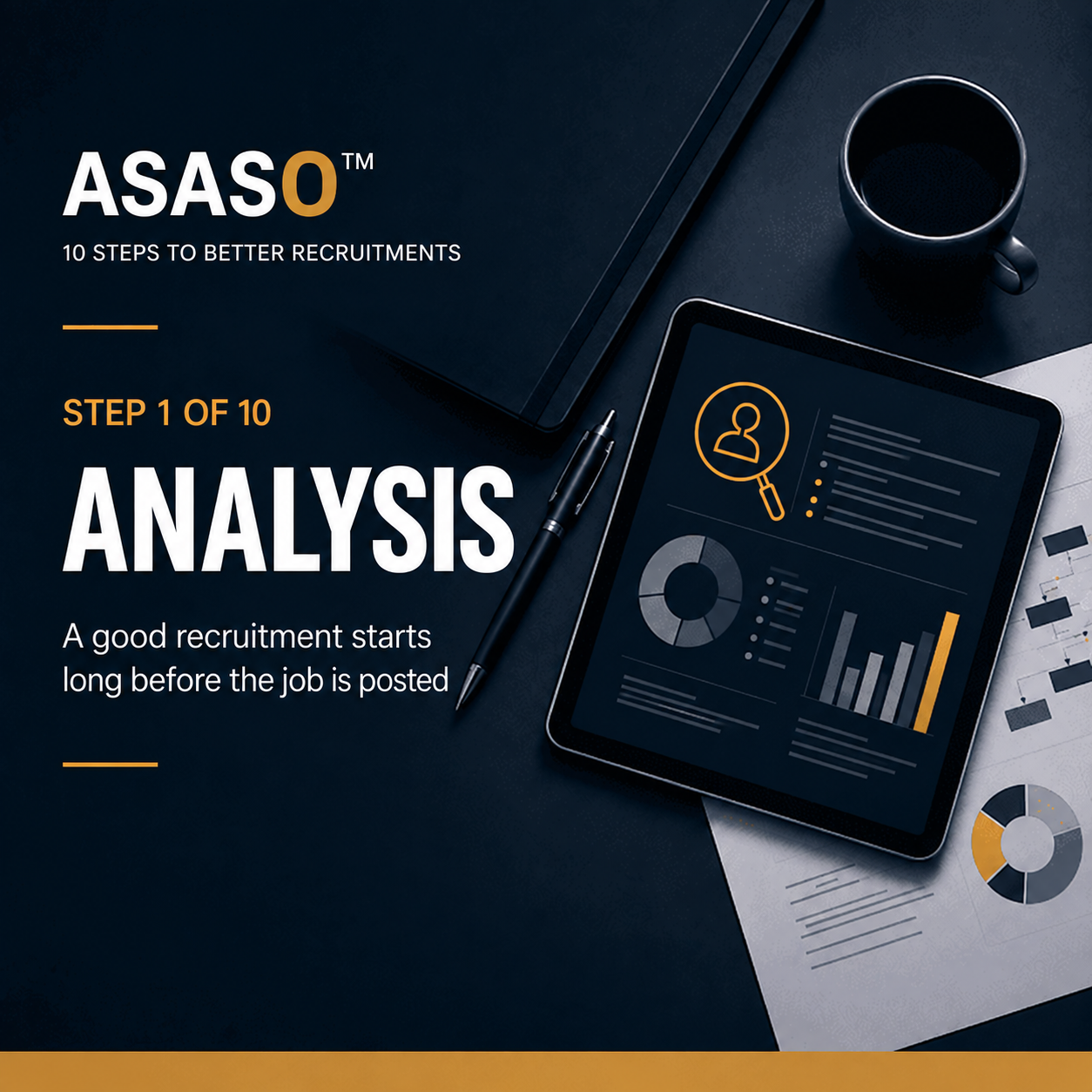
ASASO™ step 1 of 10: Analysis
A good recruitment process begins by understanding the value the new employee must create.
Read more ↗
ASASO™ step 2 of 10: Advertising
Turn the job analysis into an honest invitation that helps relevant candidates recognise the opportunity.
Read more ↗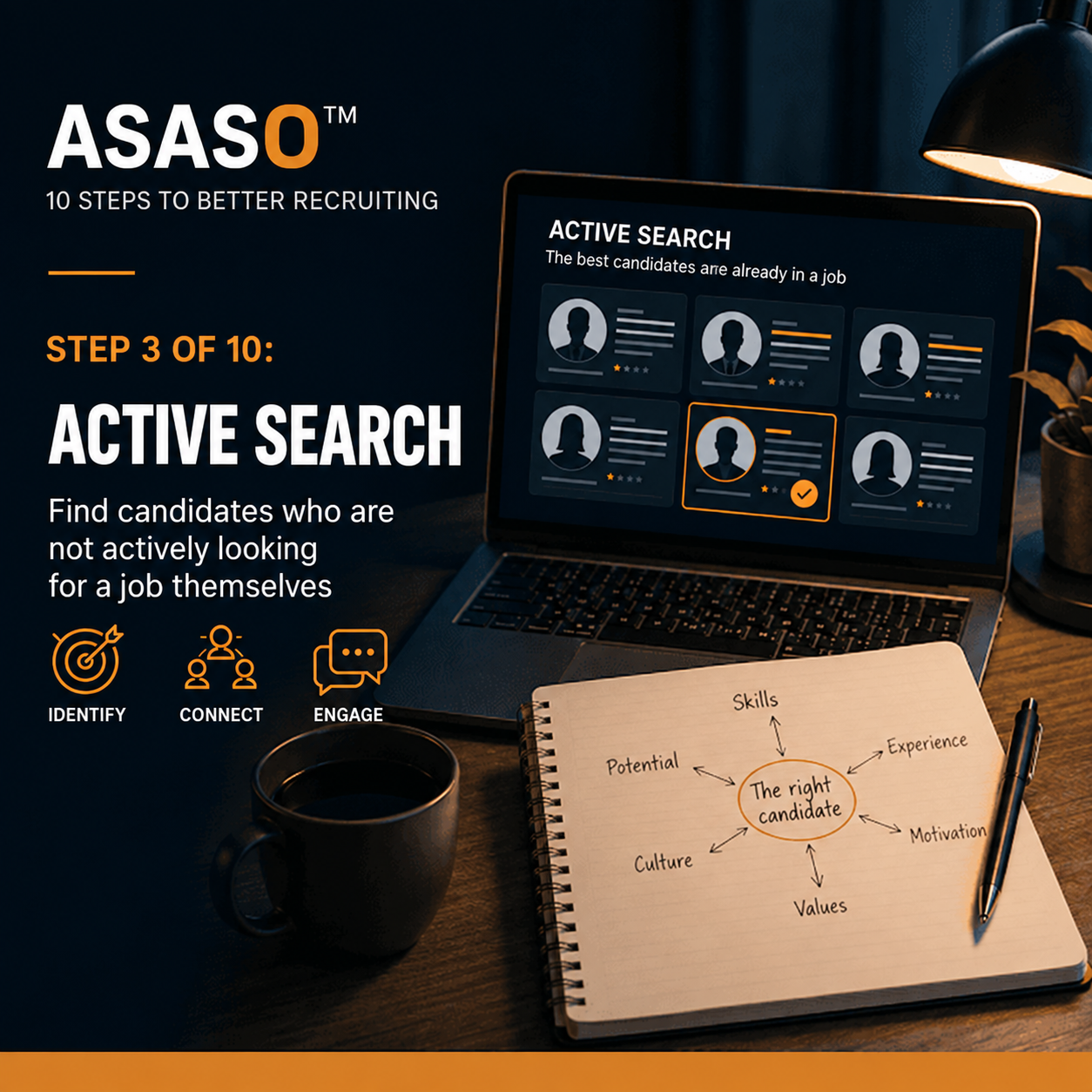
ASASO™ step 3 of 10: Active search
Reach relevant people through focused research and a conversation that respects their circumstances.
Read more ↗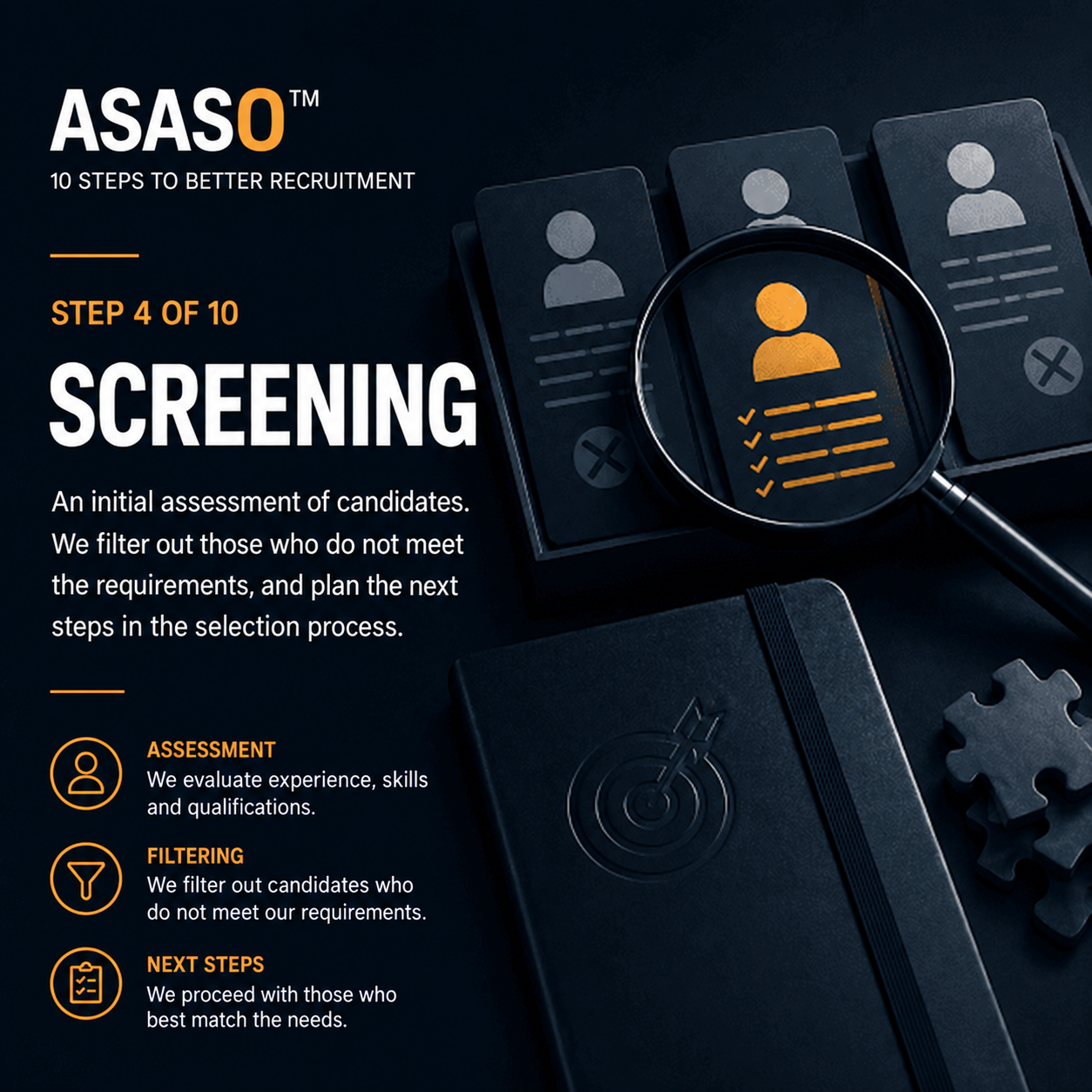
ASASO™ step 4 of 10: Screening
Use applications to identify what needs investigation, rather than treating a CV as proof of future performance.
Read more ↗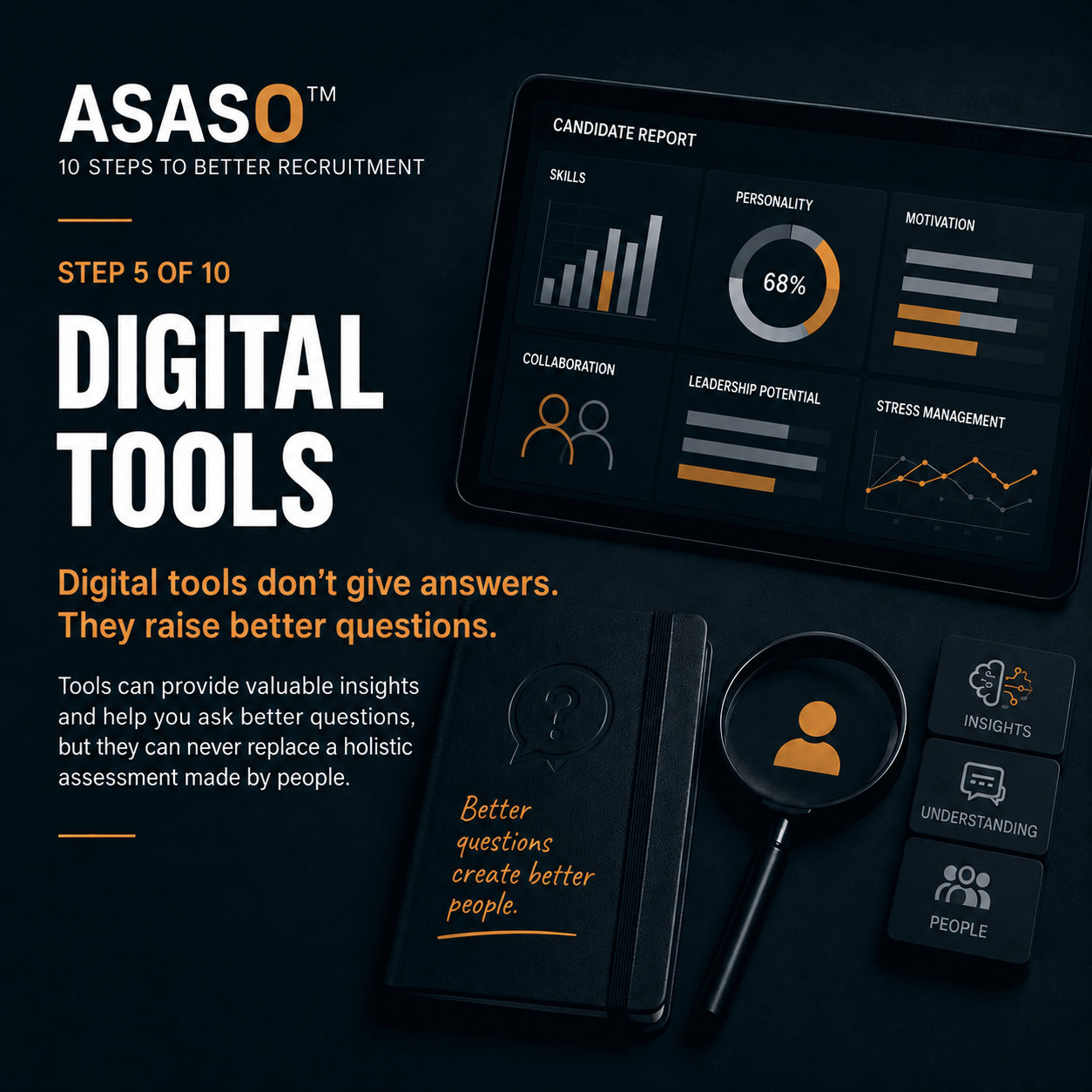
ASASO™ step 5 of 10: Digital tools
Use assessment reports to create better questions, with a clear understanding of their limits.
Read more ↗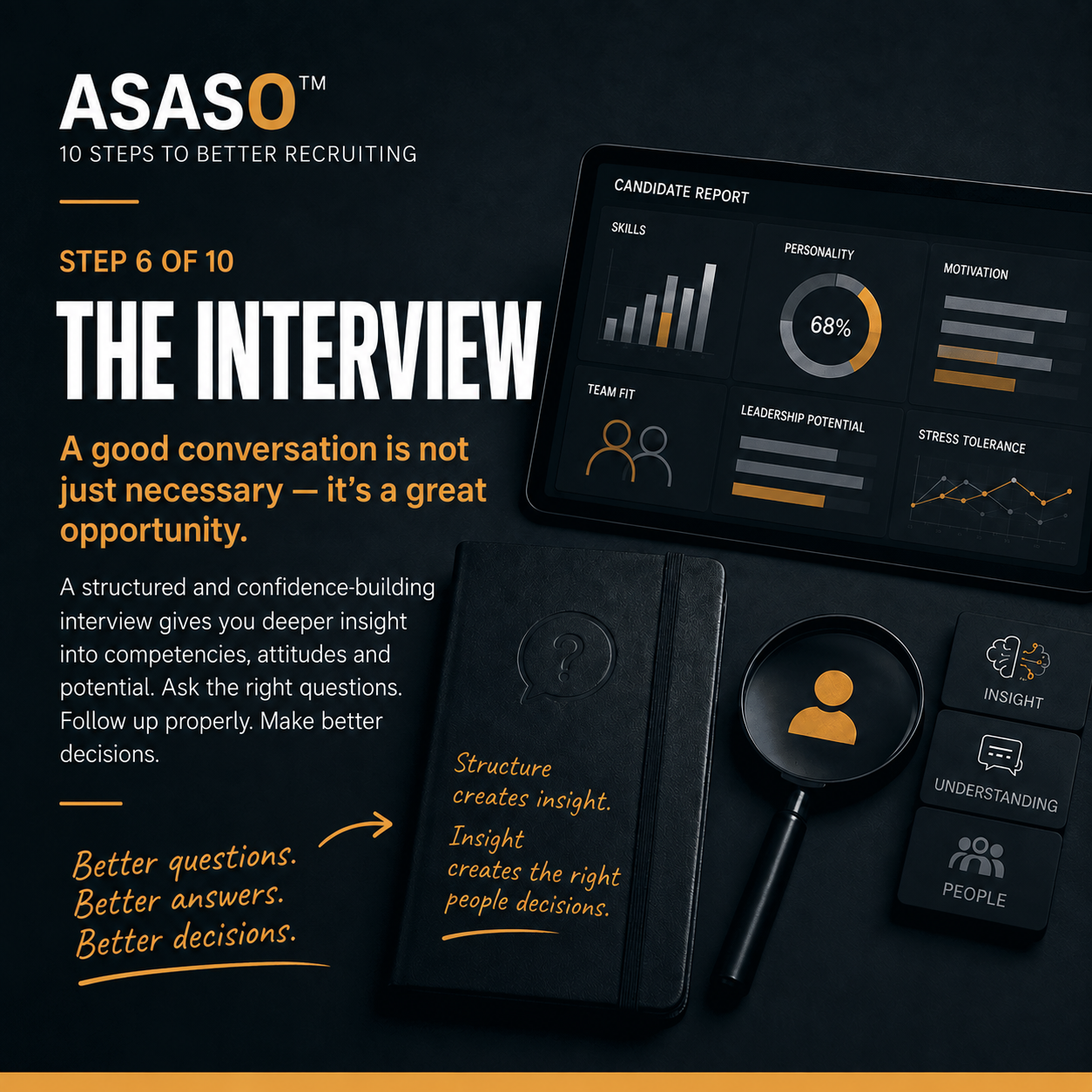
ASASO™ step 6 of 10: The interview
A natural conversation needs a deliberate method if it is to support a sound hiring decision.
Read more ↗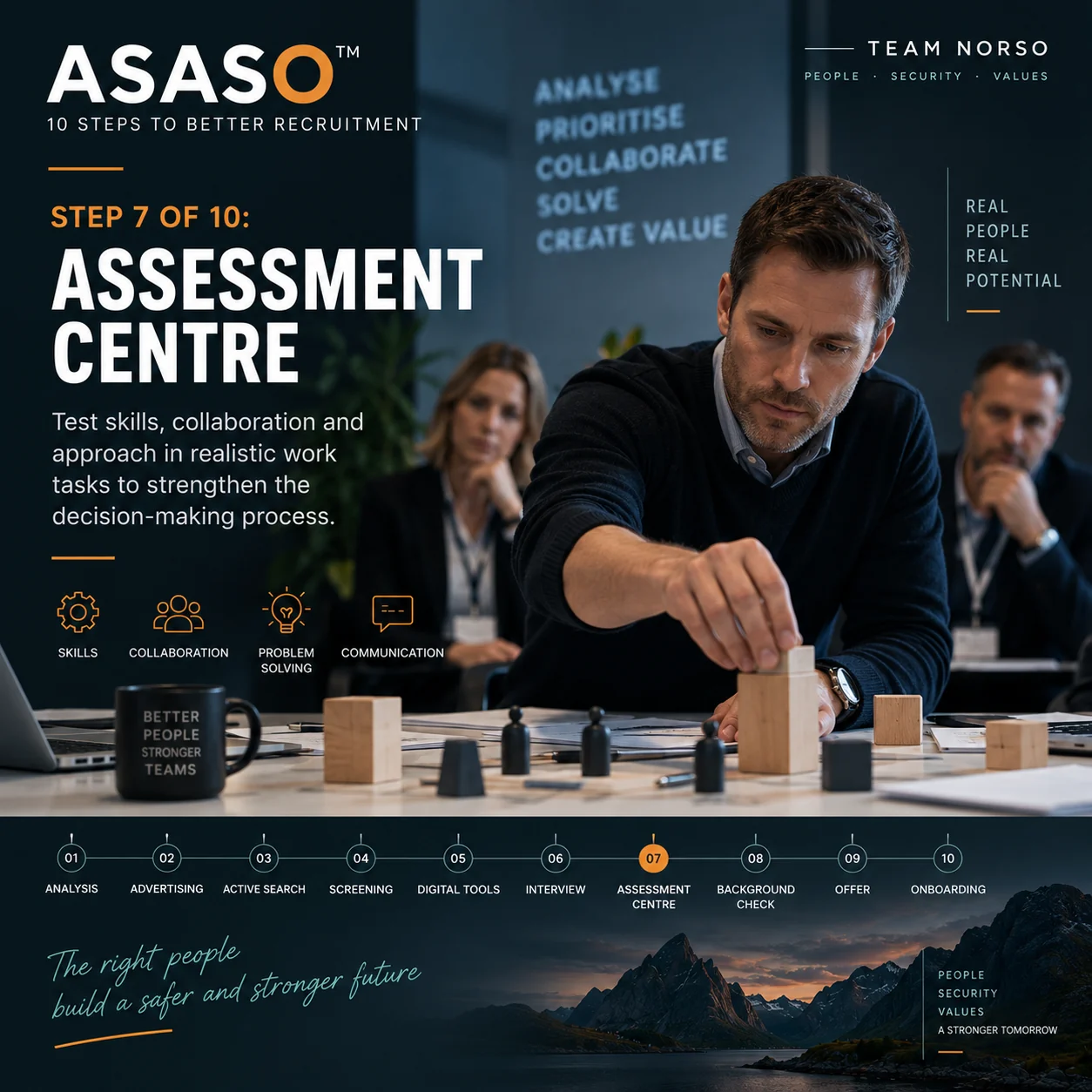
ASASO™ Step 7 of 10: Assessment Centre
Stop asking candidates what they can do. Let them show you.
Read more ↗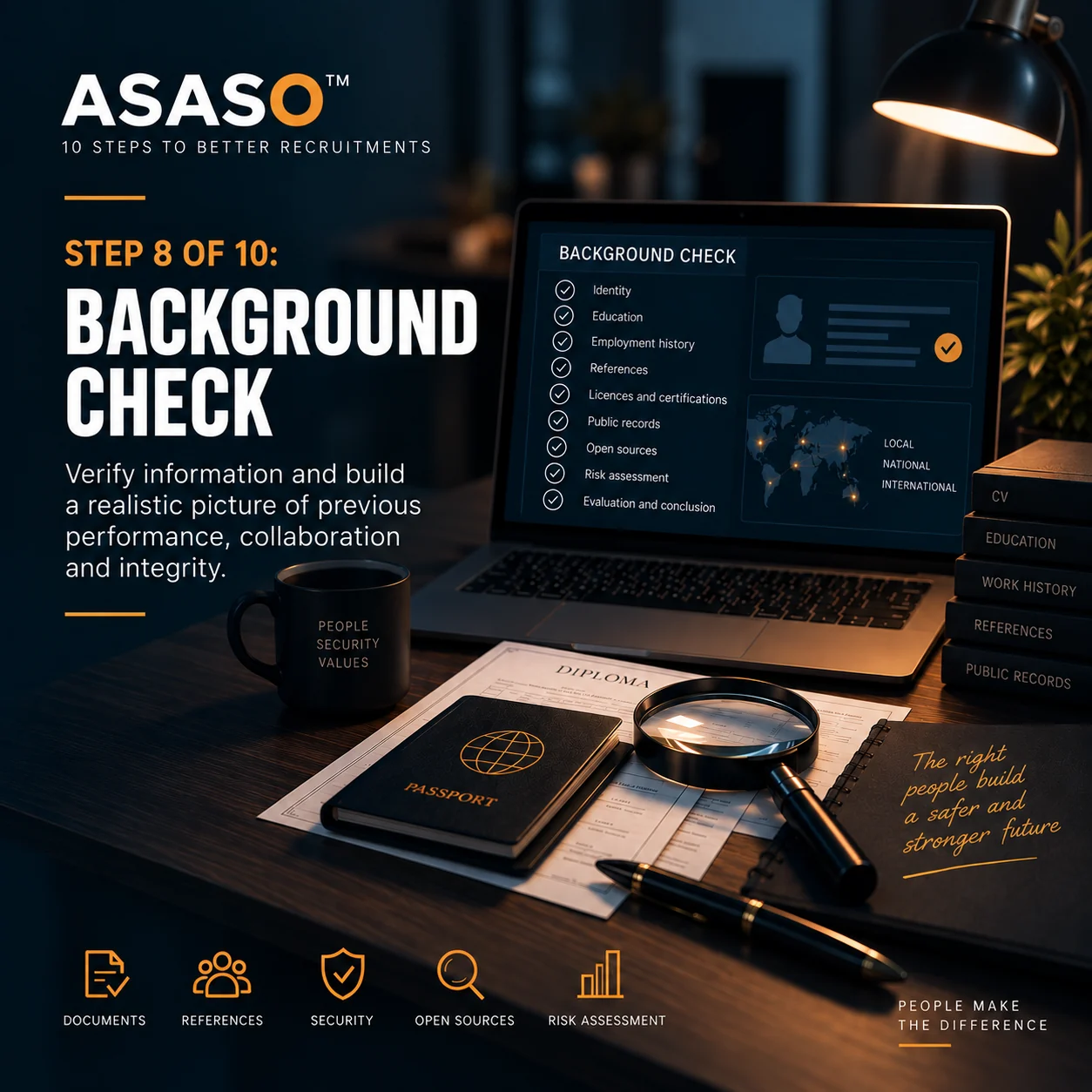
ASASO™ step 8 of 10: Background check
Verify relevant information, investigate discrepancies and reduce uncertainty before the final hiring decision.
Read more ↗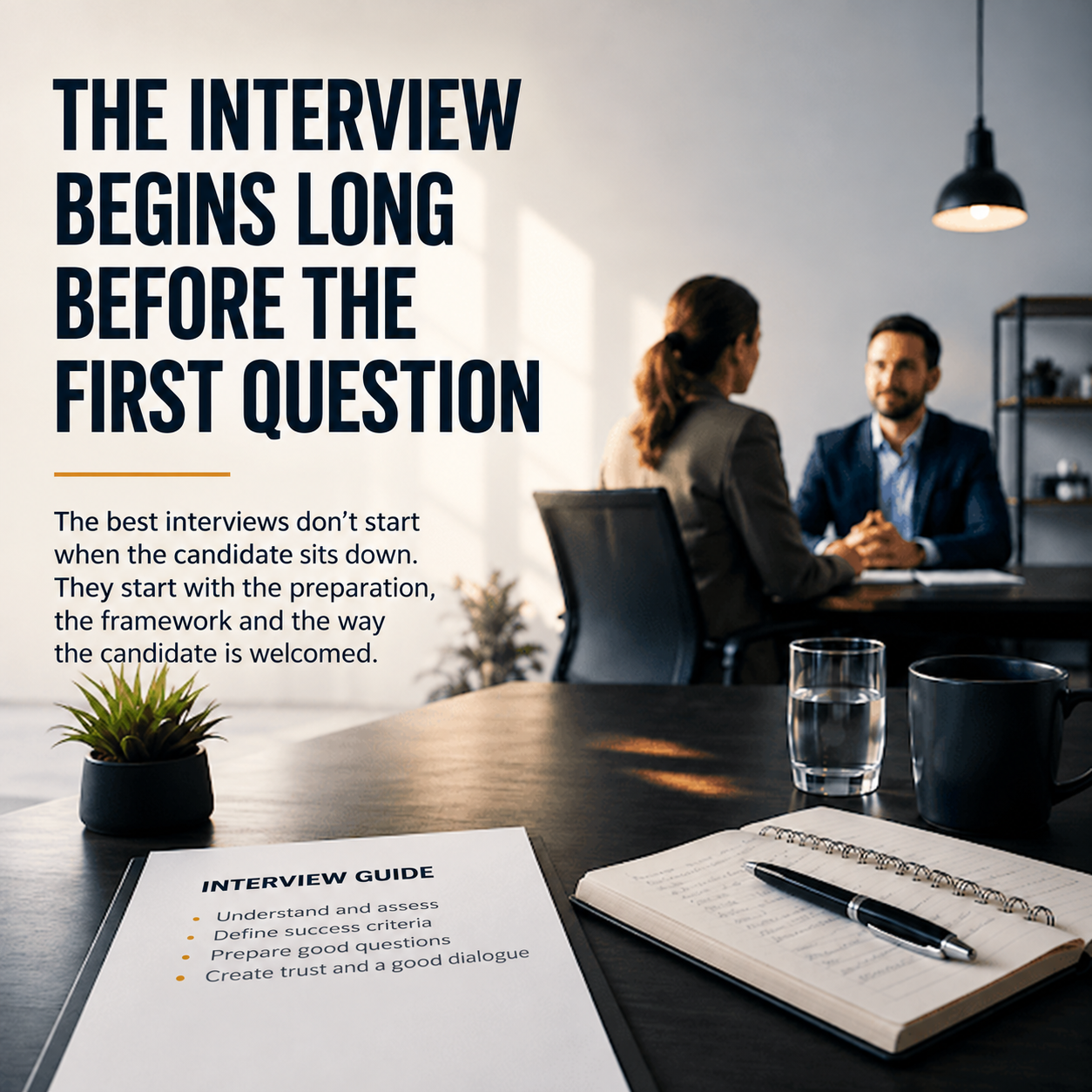
The interview begins before the first question
Preparation, communication and the setting shape an interview before the formal conversation starts.
Read more ↗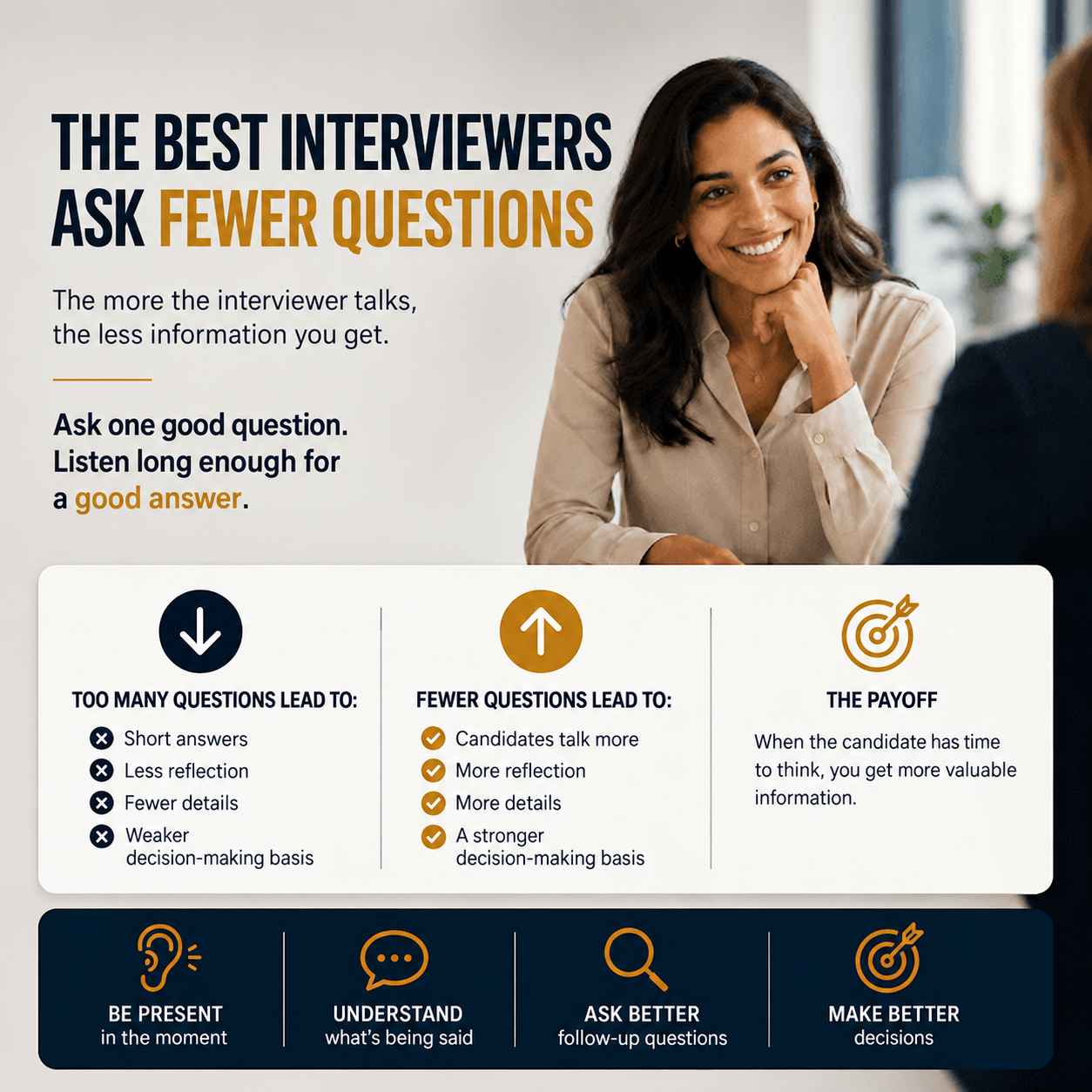
The best interviewers ask fewer questions
Give candidates room to tell the full story, then use focused follow-up to understand the evidence.
Read more ↗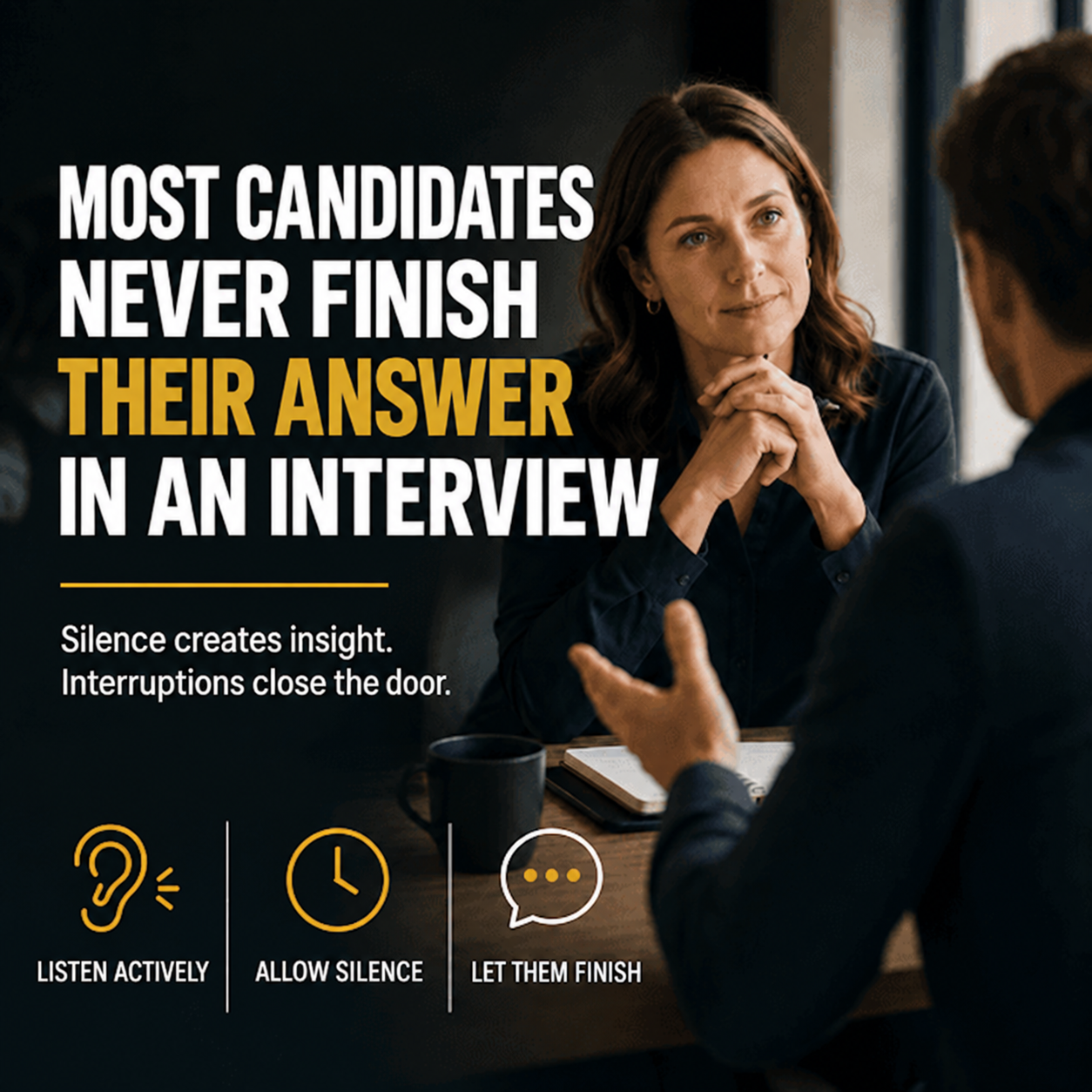
Most candidates never get to finish their answer
An interview improves when you give candidates time to think, explain and finish their answer.
Read more ↗
You hear the candidate. Are you really listening?
Active listening turns polished answers into a clearer understanding of how a candidate thinks and works.
Read more ↗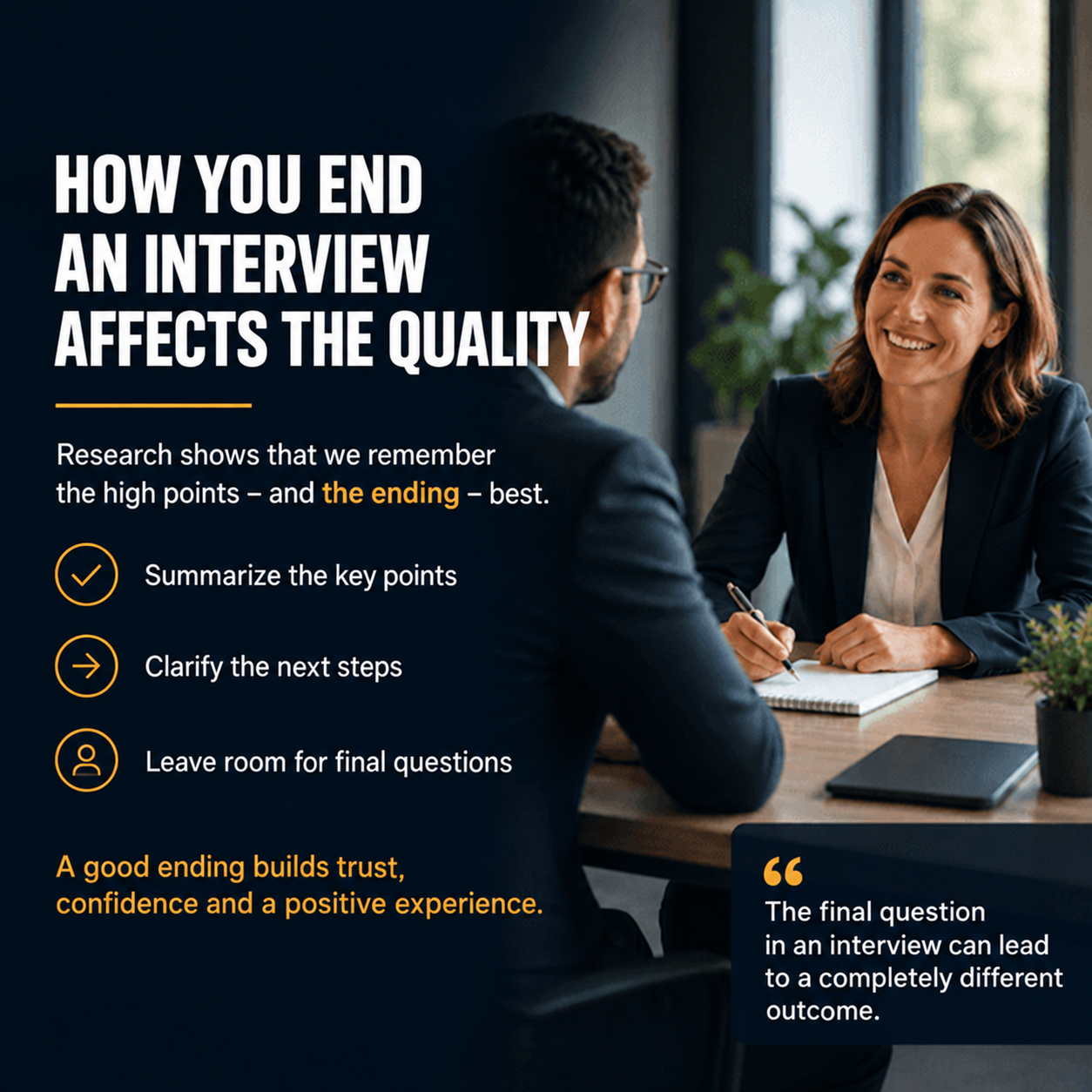
How you end an interview matters more than you think
A thoughtful ending strengthens the candidate experience and the information you take into your decision.
Read more ↗
The most important work starts after the candidate leaves
Separate evidence from impressions and turn interview information into a structured hiring decision.
Read more ↗
The cover letter matters more than ever
AI can help candidates explain transferable skills that a CV or standardised form may miss.
Read more ↗
“What are your strengths and weaknesses?”
Prepare a specific, honest answer that connects self-awareness with the role you are applying for.
Read more ↗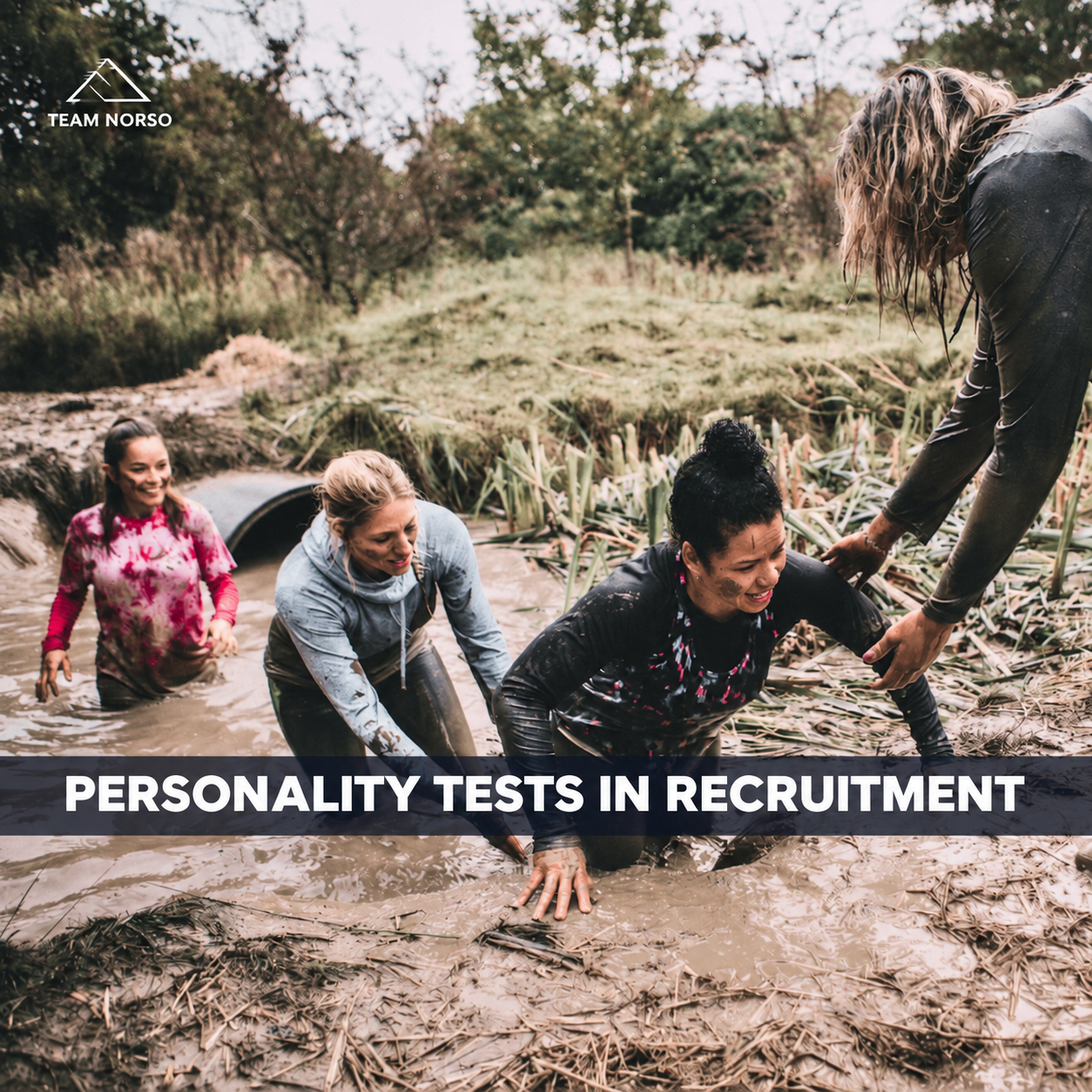
Personality tests in recruitment: benefits and limits
Use personality information as one contribution to a broader, job-relevant assessment.
Read more ↗
Is it a good match?
Recruitment works best when candidates and employers understand what they are choosing together.
Read more ↗
Change your perspective: the employer needs you too
Approach an interview as a two-way discussion about a possible working relationship.
Read more ↗02 / CAPABILITY
Resilient Leadership
Perspectives on leadership, resilient teams, motivation and the personal capacity to perform when demands rise.

The Johari Window: What You Don’t See in Yourself Shapes How You Lead
You know yourself. Or at least you think you do.
Read more ↗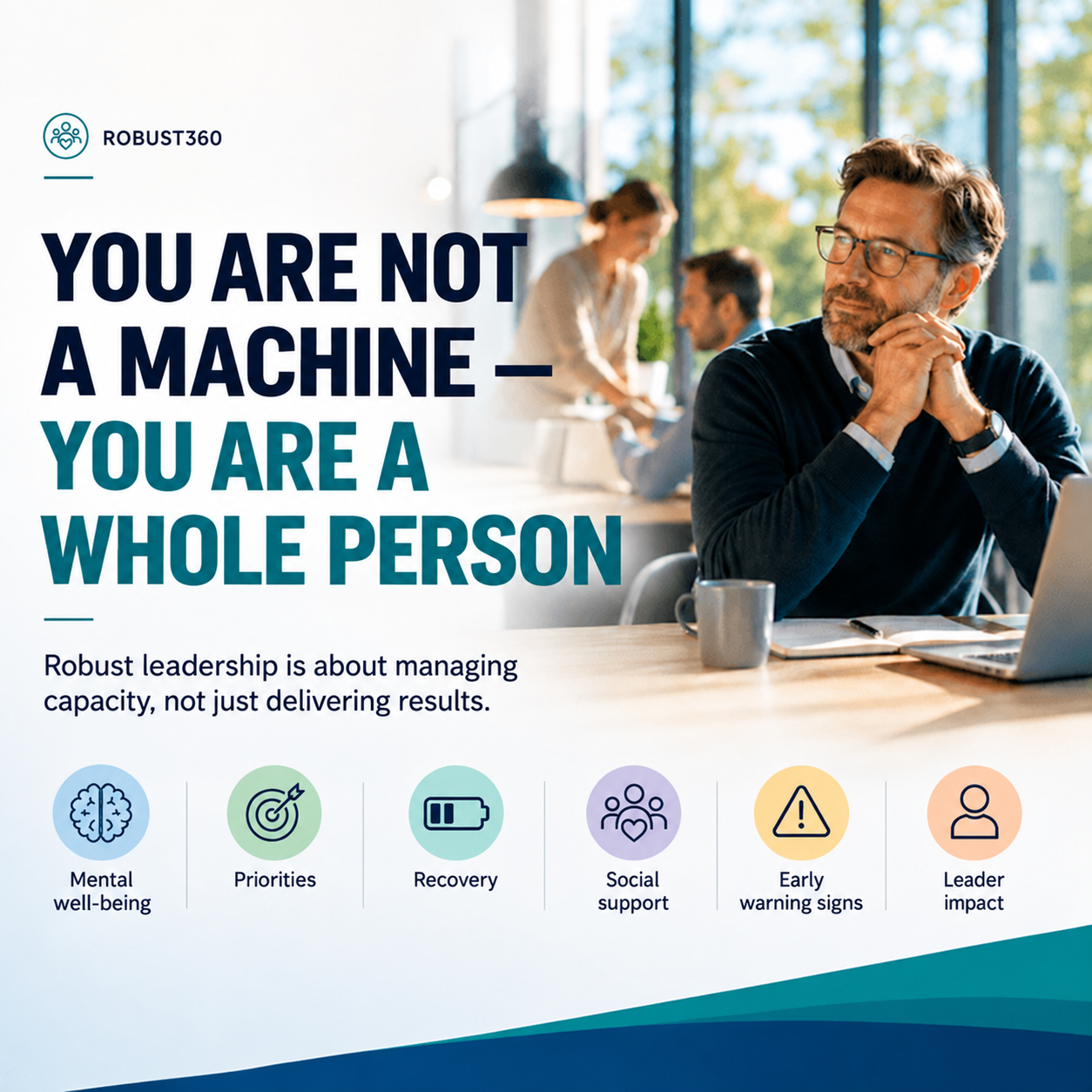
You are not a machine. Neither are your employees.
Sustained performance requires attention to capacity and recovery, as well as results.
Read more ↗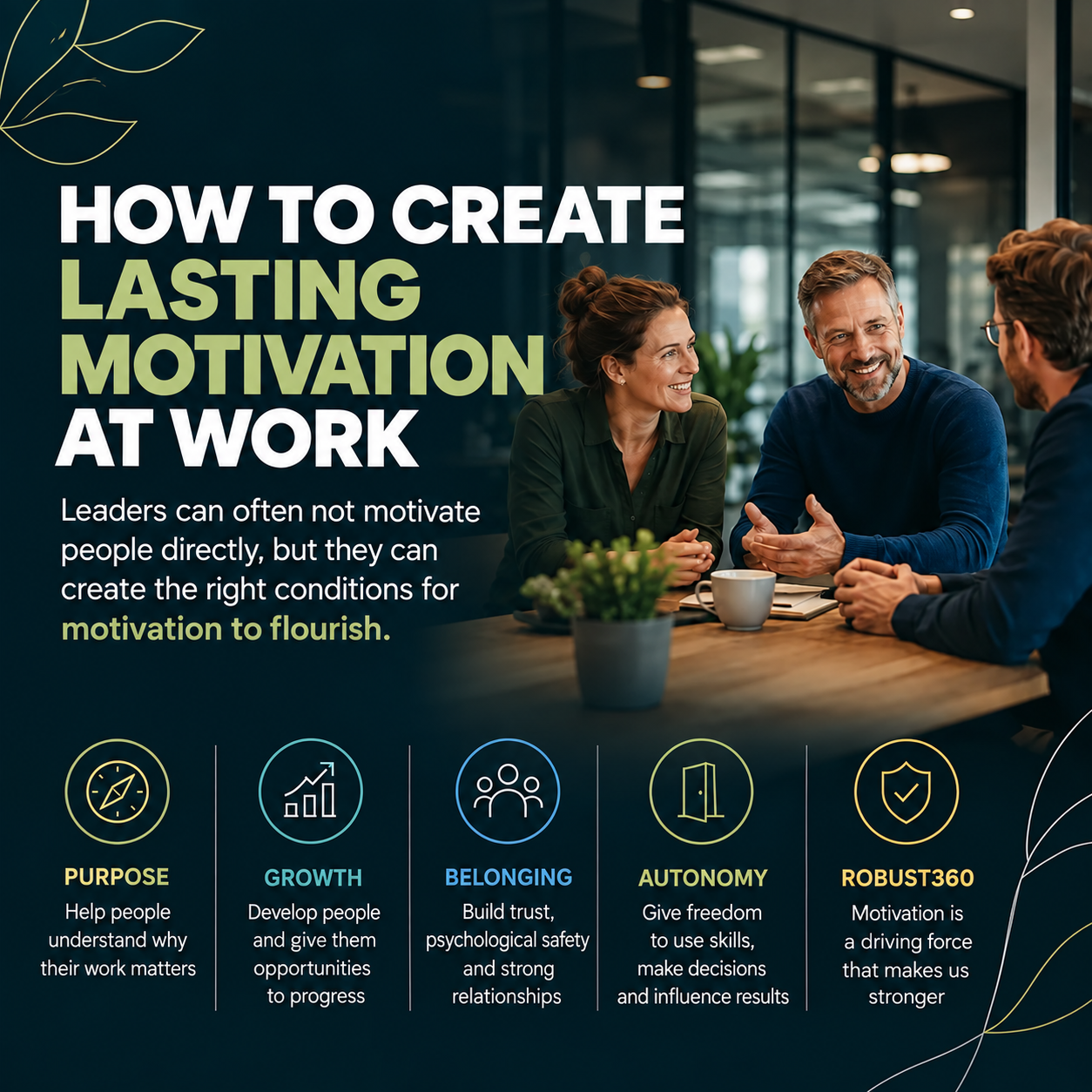
How do you create motivation that lasts?
Meaning, mastery, trust and autonomy create conditions in which people want to contribute.
Read more ↗
We are all leaders
Decision-making, initiative and self-leadership are capabilities we use beyond formal management roles.
Read more ↗
Resilience is built between people
Trust, belonging and mutual responsibility turn individual capability into collective strength.
Read more ↗
When the leader becomes a source of stress
Clear expectations, trust and predictable priorities help teams handle pressure without unnecessary uncertainty.
Read more ↗
Scandinavian leadership and the Nordic model
Explore the connection between trust, participation and shared responsibility in Scandinavian working life.
Read more ↗
When leaders talk more than they deliver
Trust grows when plans become visible action, with clear ownership and follow-through.
Read more ↗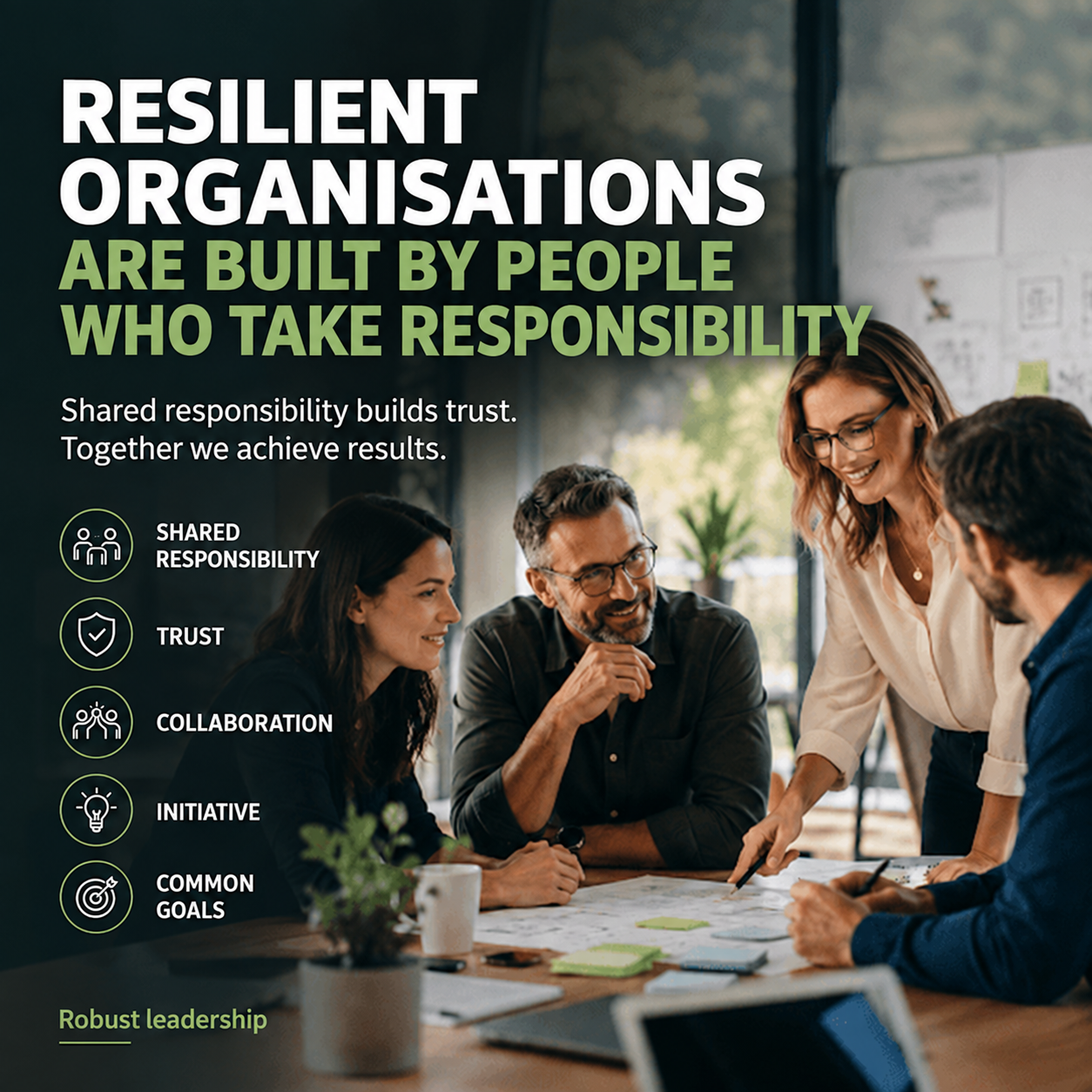
Resilient organisations are built by people who take responsibility
A leader sets direction. Shared ownership enables the whole organisation to move.
Read more ↗
The lonely leader
An independent mentor can provide space to reflect on responsibilities that are difficult to share inside the organisation.
Read more ↗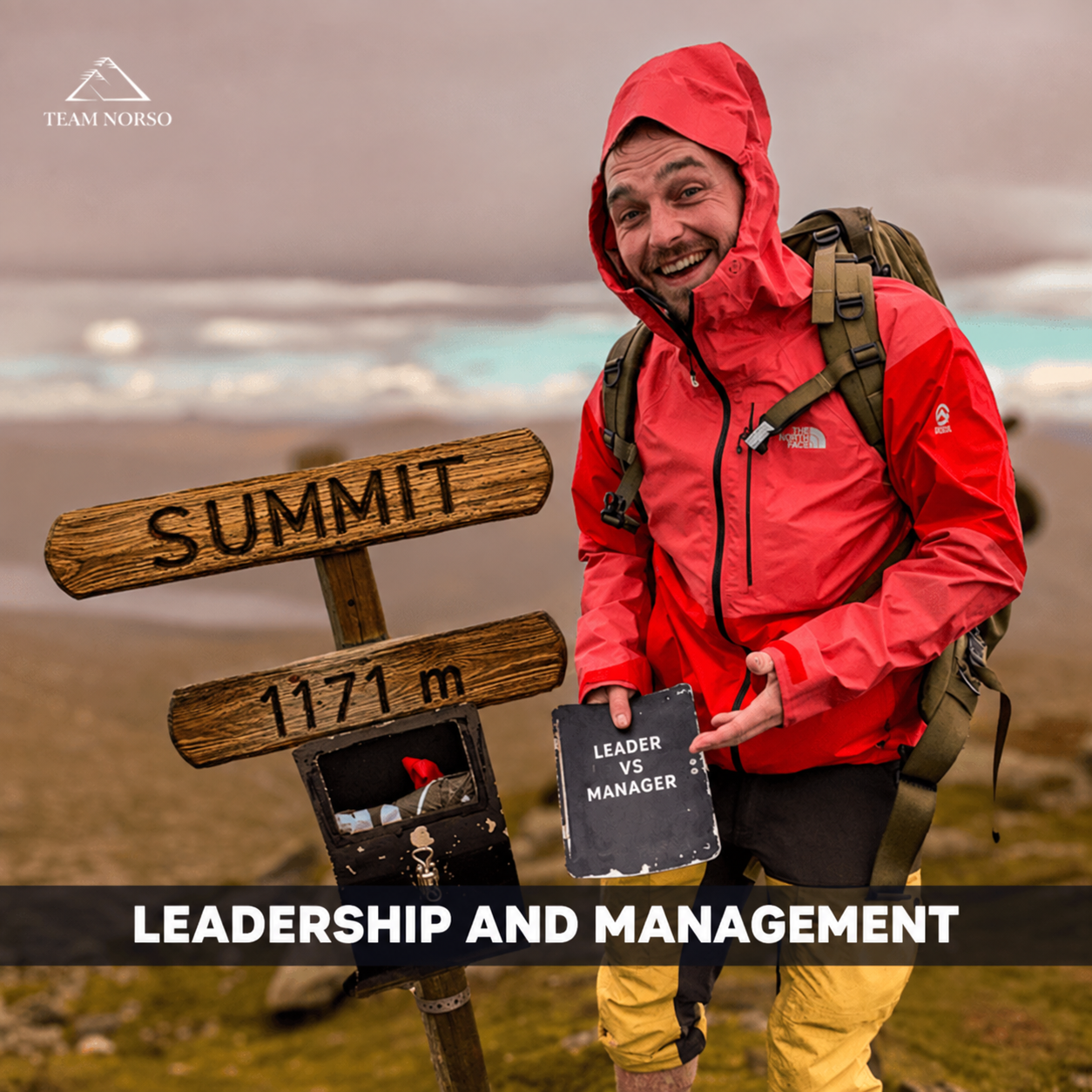
Leadership and management: two roles, one purpose
Combine direction and trust with clear responsibilities, structure and follow-through.
Read more ↗
Developing resilient leadership through mental skills
Practise attention, reflection and coping skills before demanding situations arise.
Read more ↗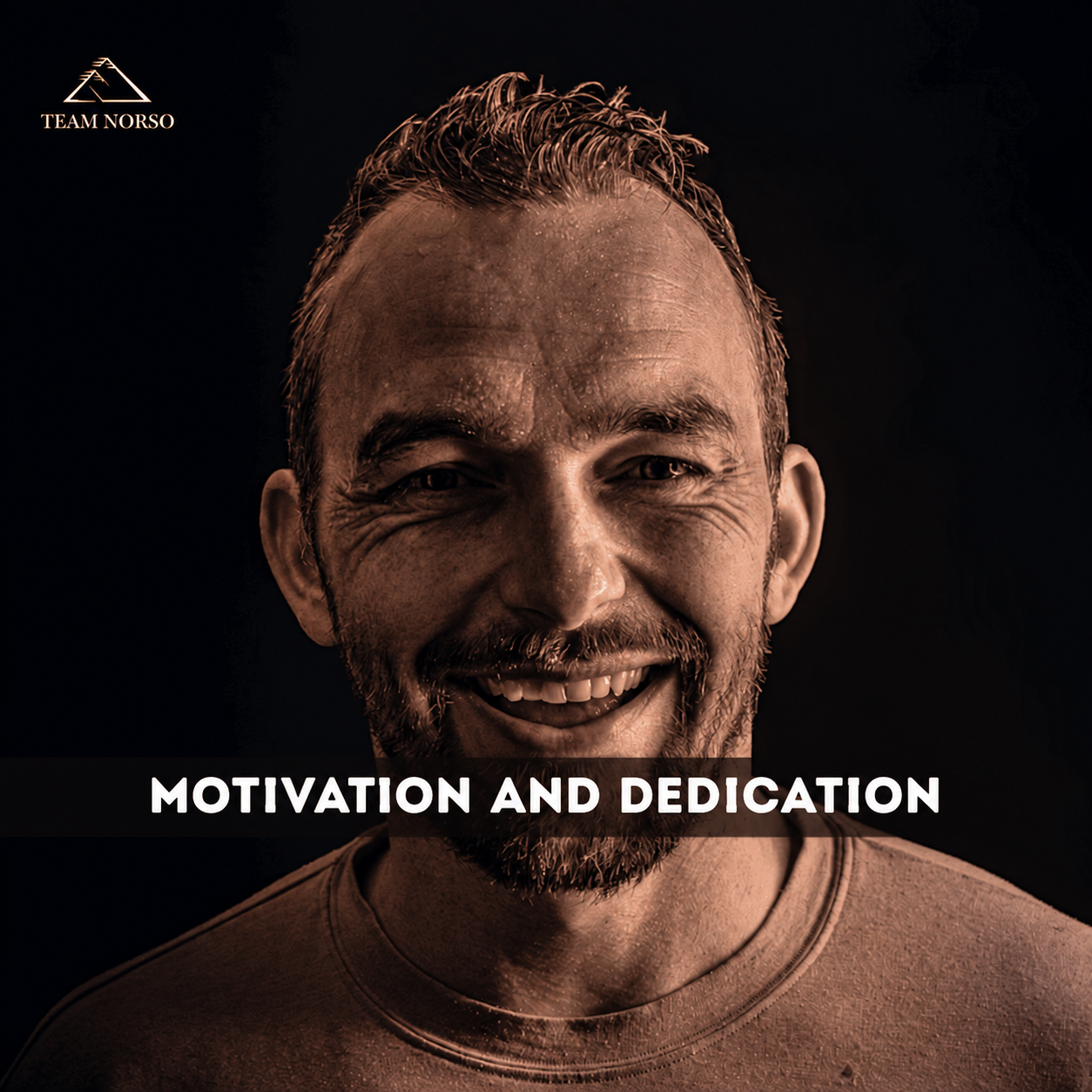
Motivation and dedication
Consider not only what you want to achieve, but the effort and trade-offs you are willing to make.
Read more ↗
Understanding what motivates you
Explore six practical patterns of motivation, their strengths and the difficulties they can create in a team.
Read more ↗
Are you getting enough sleep?
Sleep supports learning, attention and the capacity to perform in everyday life.
Read more ↗
Sleep and decision-making
Sleep is part of the preparation for clear thinking and important decisions.
Read more ↗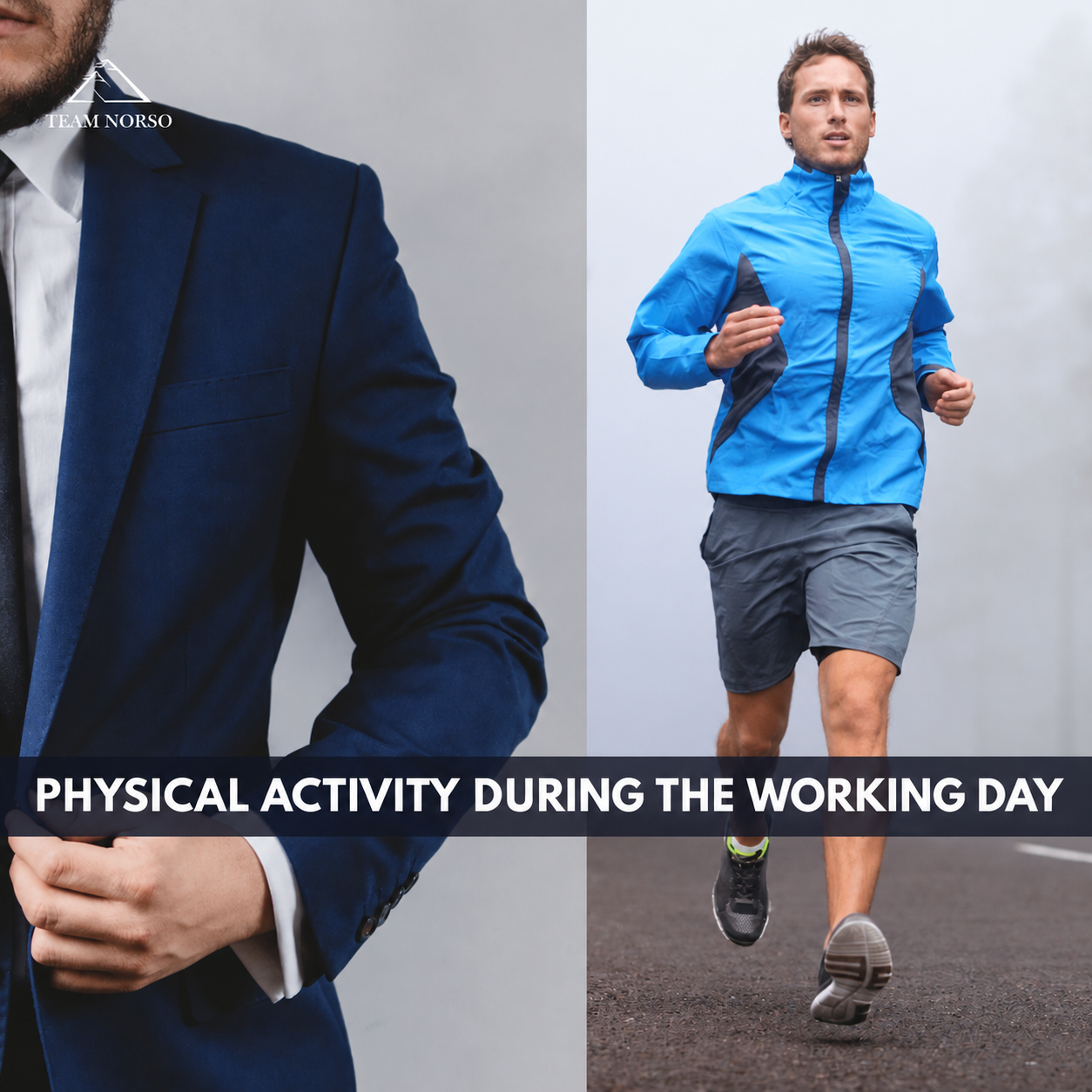
Physical activity during the working day
Making room for movement can support wellbeing, relationships and sustainable working capacity.
Read more ↗