Organisations invest in skills, processes and technology, yet results can remain disappointing. Capable employees leave, collaboration weakens, engagement falls and conflict increases. Everything appears to be in place, but the potential remains unrealised.
The problem is often deeper than missing expertise: people have stopped caring about one another.
Seeing, supporting and helping colleagues is fundamental to resilient teams. When people feel recognised, valued and taken seriously, wellbeing, motivation and performance can improve. Without that experience, the opposite often follows.
Most people want to contribute, experience competence and do meaningful work. Withdrawal usually develops through small events: nobody asks how things are going, support does not arrive, effort is taken for granted and mistakes receive more attention than success. People gradually feel invisible.
When we do not feel cared for, caring for others becomes harder. We retreat into our own tasks. Collaboration, learning and willingness to help decline. This affects sustained performance as well as the working environment.
Trust is built through behaviour
Trust is not simply a personality trait. It grows through repeated words and actions: keeping commitments, showing up, sharing knowledge, acknowledging problems and revealing strengths as well as limitations.
Small actions accumulate into strong relationships. Team members need not agree on everything. In a resilient team they can disagree while trusting one another’s intentions and commitment to the team.
These relationships are tested when pressure rises. Cooperation is easier when everything is going well.
Safety allows people to contribute
Psychological safety is about more than comfort. It affects whether people use their full capability: asking questions, admitting mistakes, proposing ideas, challenging assumptions and raising concerns.
Without it, information is withheld. People avoid questions for fear of appearing uninformed and keep suggestions to themselves to avoid negative reactions. Problems remain hidden rather than being resolved.
The organisation loses access to experience and perspectives already present among its people. A poster or values statement cannot fix this. Safety develops through daily interactions and trust.
Leaders set an example; everyone contributes
A leader’s actions shape culture. Showing interest, listening before concluding and acknowledging mistakes makes similar behaviour easier for others. Leaders are role models.
Culture is not their responsibility alone. Even the best leader needs colleagues to take responsibility for the community. Strong relationships cannot develop if everyone waits for someone else to act.
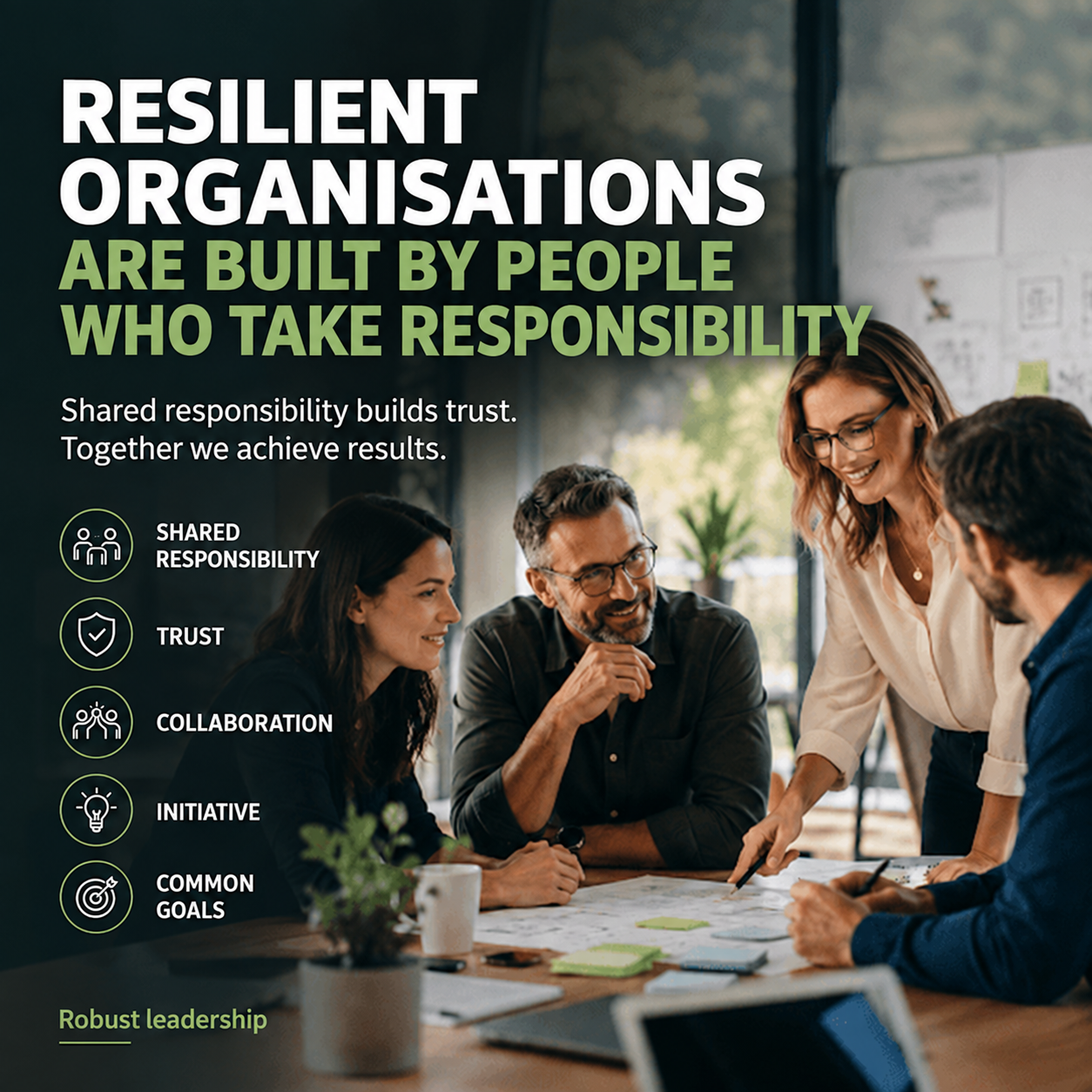
Resilient environments combine leadership with mutual responsibility.
Small acts matter
Help a busy colleague. Include a new person at lunch. Ask how someone is really doing. Share knowledge that makes their work easier. Recognise an effort that might otherwise go unnoticed.
These actions may take seconds but can build relationships that last for years. Repeated over time, they create a culture in which asking for help is as natural as offering it.
Strength is not isolation
Resilience is sometimes imagined as an exceptional person who withstands every demand alone. Often the strongest person is the one with others around them when the load grows.
Organisations depend on people performing together. They are strengthened by collaboration, support and shared responsibility, rather than individuals fighting separate battles.
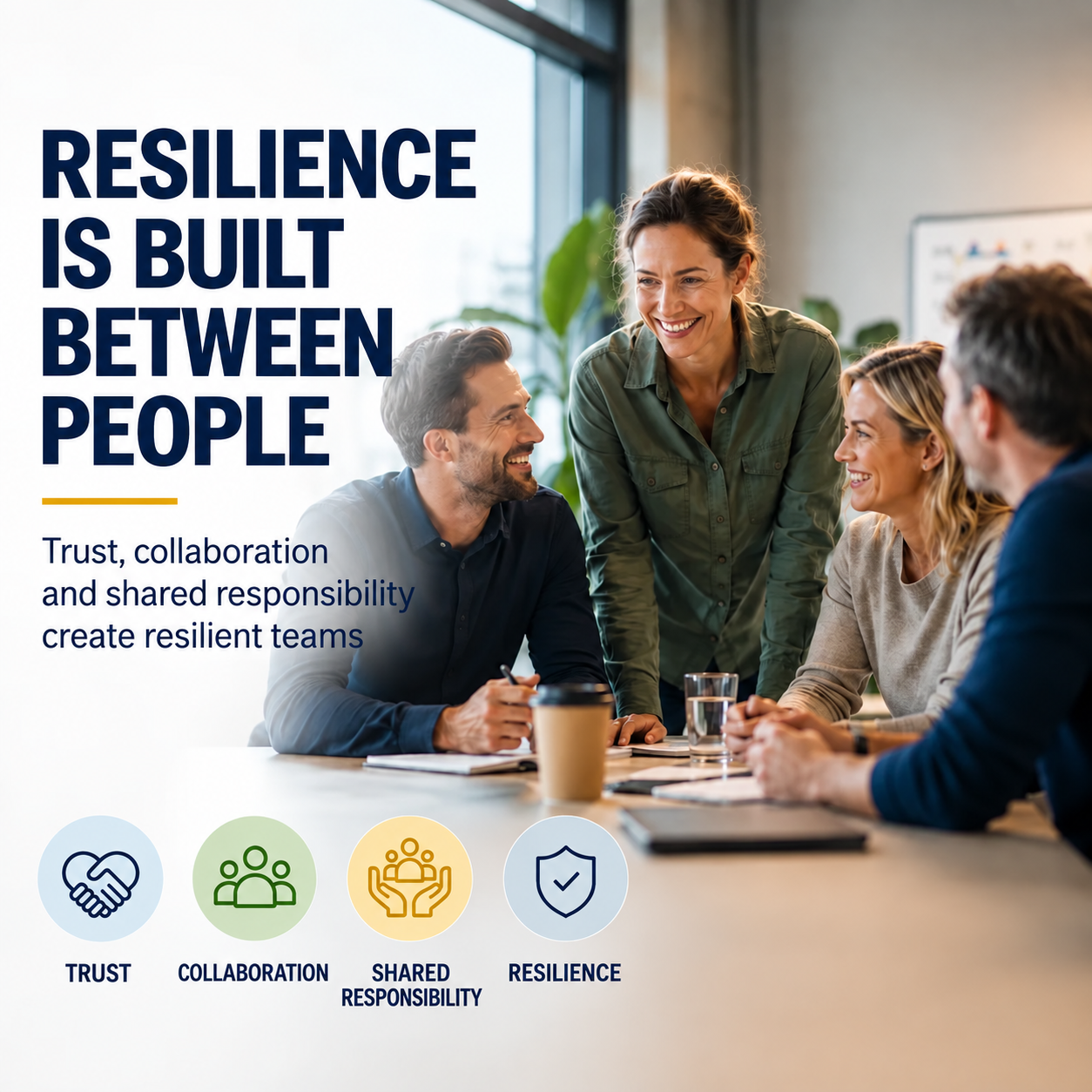
People perform best when they feel recognised and valued. Trust grows through repeated actions. Psychological safety supports ideas, learning and joint problem-solving. Leaders influence culture daily, and everyone contributes to it.
Resilience is built between people.
English editorial adaptation of the Norwegian original.
Bring the ideas into your organisation.
Talk to us about your leadership, team or recruitment challenge.
Book a conversation ↗