Motivation is widely discussed in leadership and often oversimplified. Leaders ask how to encourage greater performance, responsibility and initiative. The question matters, but motivation is not simply a way to make people work harder.
This article explores several factors rather than offering a universal answer. Its purpose is reflection and discussion. People differ, but some patterns are useful to consider together.
At TEAM NORSO, we increasingly connect motivation with resilience. In our work, people with a strong reason to continue often handle setbacks differently from those who have lost their drive. Leaders who create conditions for motivation also support organisational resilience.
Think of a period when you were highly motivated in work, study, sport or personal life. The source was often meaning, interest or development rather than a bonus, campaign or inspiring speech. Lasting motivation frequently grows from within; leaders can influence the environment that allows it to develop.
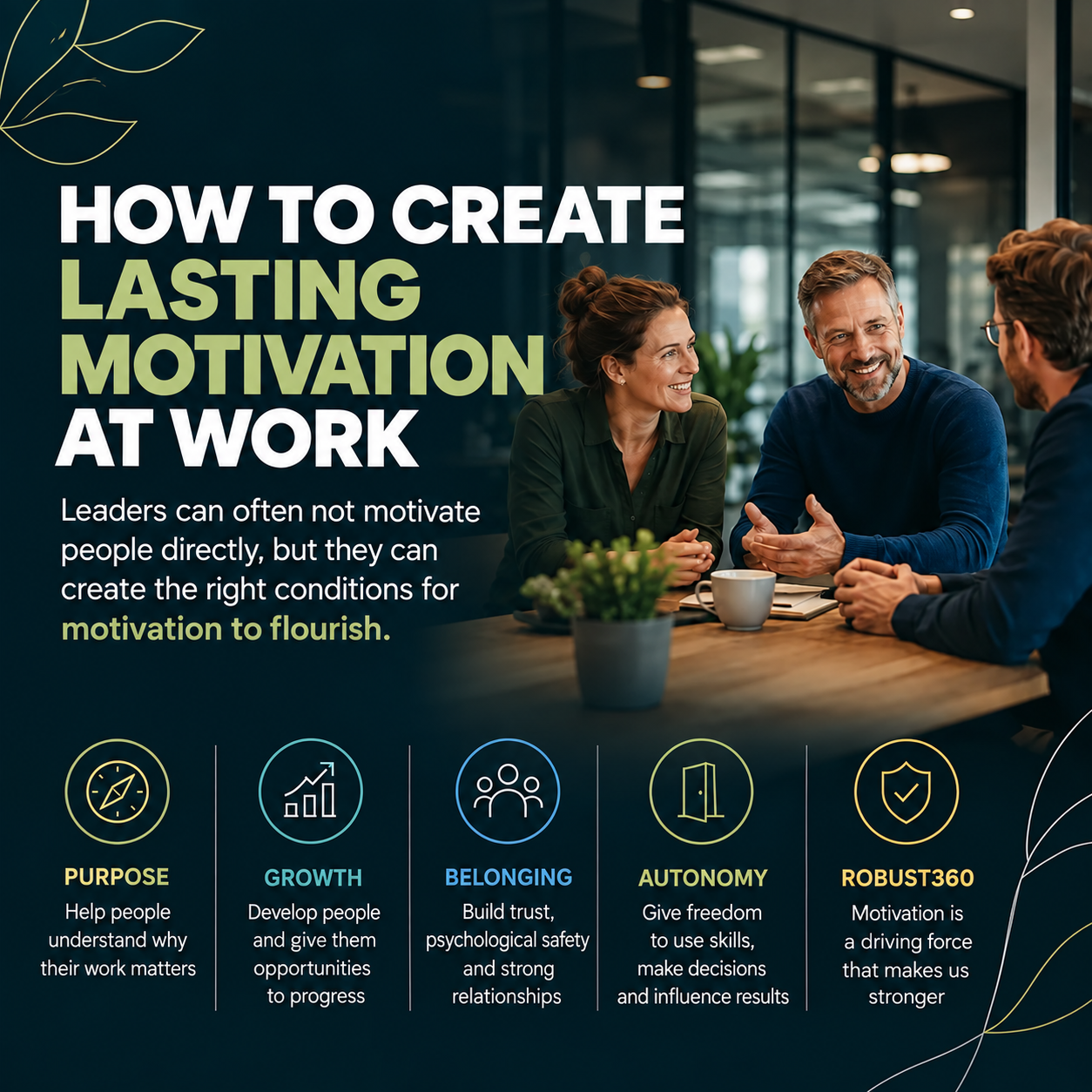
Make the purpose visible
People invest considerable effort when they know it matters to others. Parents, volunteers and committed colleagues illustrate this. A connection to something beyond oneself can help sustain effort when demands increase.
Employees sometimes understand their tasks better than their purpose. Work becomes a list to complete. Leaders should repeatedly explain how the organisation creates value for customers, users or society, and how each person contributes.
Documentation may feel like pointless administration until an employee sees how a customer uses it to protect quality and reduce risk. The task is unchanged; its meaning becomes clearer.
Develop mastery, not only results
Learning, solving problems and noticing progress strengthen confidence. Success with something previously difficult makes a person more willing to try again.
Organisations often measure delivery more carefully than learning. Good leaders also help people become more capable: useful feedback, appropriate challenge, development opportunities and tasks with room to grow.
For a new employee, focusing only on mistakes can obscure real progress. Helping them recognise increasing competence builds confidence and motivation. Such experiences can also make uncertainty and setbacks easier to face.
Motivation is social
Relationships affect daily experience. Good colleagues can make difficult work worthwhile; poor relationships can undermine an otherwise interesting role.
Trust and psychological safety allow people to ask questions, share ideas, admit mistakes and disagree without ridicule. Where safety is missing, energy goes into self-protection and avoiding errors rather than learning.
Compare a tense meeting where nobody risks speaking with a team that can think aloud and acknowledge uncertainty. The difference may lie less in individual competence than in trust.
Resilient teams can ask for help and use mistakes to learn rather than allocate blame. Trust is a practical condition for motivation and resilience.
Give people influence
People want to use their judgement and shape their work. Requiring approval for every small decision can gradually replace initiative with passivity.
Clear goals, expectations and boundaries remain necessary. Within them, autonomy supports ownership. People participate in shaping results rather than merely carrying out instructions.
A leader can prescribe every step or explain the objective and ask how the employee proposes to achieve it. Both may produce a result, but the second often gives more room for ownership, innovation and engagement.
Having some influence over one’s situation can also help in managing stress and change.
Notice what your leadership removes
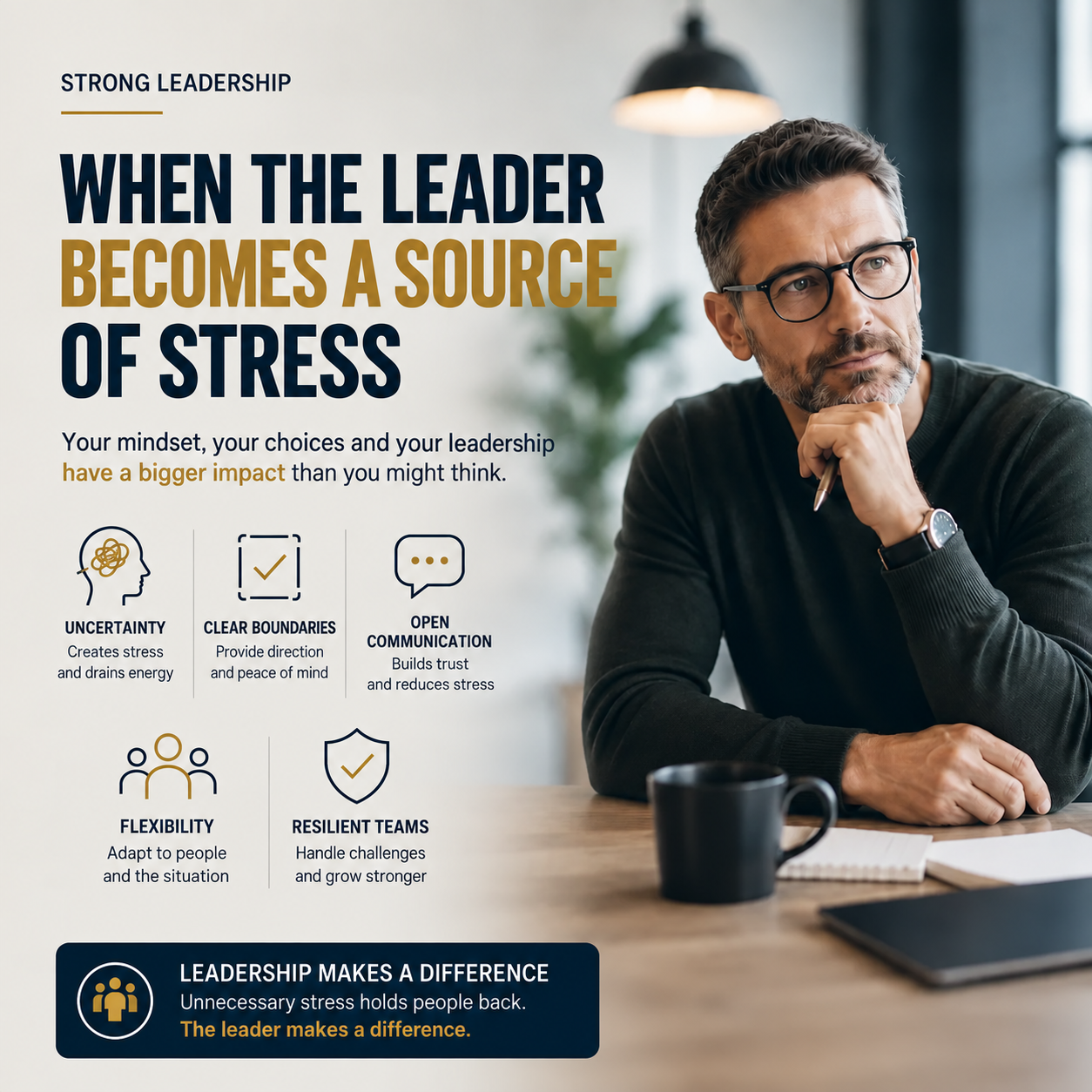
Good intentions do not prevent micromanagement, unclear priorities, delayed decisions, unfair treatment or poor communication from weakening motivation.
A leader who checks every email and approves every solution may intend to protect quality while teaching employees that initiative is pointless. Too much control and too little trust can drain motivation quickly.
A leader influences the emotional tone of a team. Ask not only which external conditions need to change, but how your own behaviour affects colleagues.
During pressure and change, the temptation to increase control can be strongest. Yet it may weaken the very conditions needed for longer-term resilience.
Give people a reason to continue
Resilience includes having a reason to use your capacity when demands grow. Meaning supports persistence, mastery supports recovery from setbacks, and trust helps people face uncertainty together.
An instruction to “push through” is not enough. Build an environment with meaning, competence, belonging and room to act. Experiences during major disruption, including the pandemic, highlighted the value of shared purpose and mutual support.
Instead of asking only how to motivate employees, ask: how can we create a workplace where people want to contribute, develop and succeed together?
Do the people you lead look forward to their work? Do they experience progress? Do they feel part of something important?
English editorial adaptation of the Norwegian original.
Bring the ideas into your organisation.
Talk to us about your leadership, team or recruitment challenge.
Book a conversation ↗