Stress has a poor reputation. Workplace discussions often frame it as something to reduce or eliminate. The reality is more nuanced.
Challenge, responsibility and periods of pressure can support development. The task is to distinguish useful challenge from sustained demands that undermine mental and physical health. Problems arise when pressure stays unnecessarily high or people face uncertainty they cannot manage.
Leadership matters here. Alongside workload, resources and budgets, the leader can strongly influence daily experience. A leader can provide confidence, direction and motivation, or unintentionally become a significant source of stress.
I meet leaders who sincerely want to support their colleagues, yet whose organisations experience frustration, stress and avoidable conflict. Often the problem is uncertainty, unclear expectations and insufficient leadership capability, rather than simply the number of tasks.
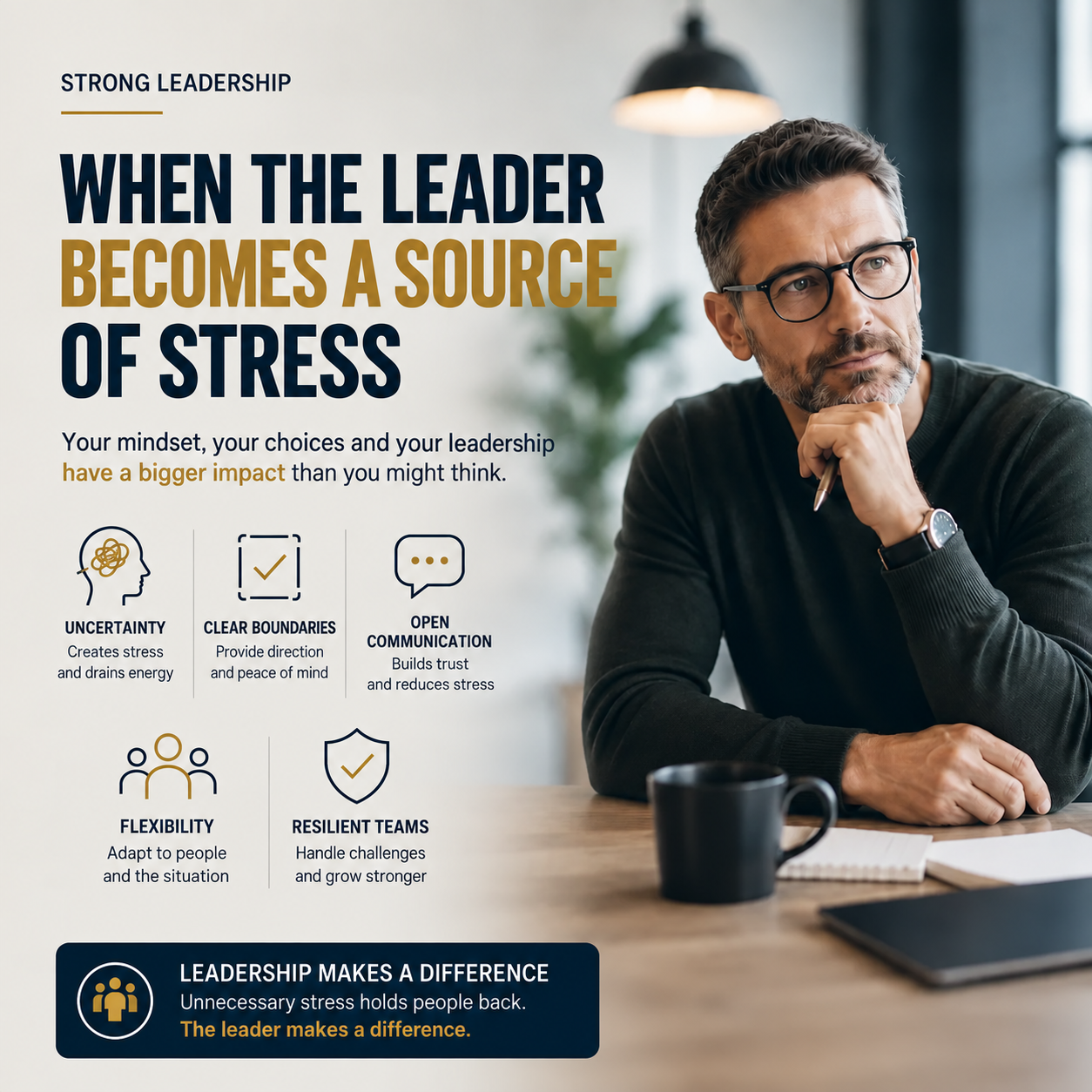
Uncertainty consumes energy
Meaning, support and predictability help people handle demanding work. Without clarity about expectations, priorities or responsibility, they spend energy interpreting the situation instead of doing the work.
Few leaders intend to make life difficult. Yet recurring patterns matter: priorities change without explanation, decisions are delayed, feedback arrives late, freedom comes without boundaries, or detailed control removes ownership.
Employees are left asking:
- What matters most right now?
- Who decides?
- What is expected of me?
- Will these priorities still apply next week?
- Have I done a good enough job?
Unanswered questions increase the mental burden of navigating uncertainty.
Balance freedom and structure
Flexibility, trust and self-leadership are useful principles. They should not become excuses for absent leadership.
Most people want freedom within an understandable purpose and clear priorities, with support when work becomes difficult. Too little freedom feels controlling; too little structure feels unsafe.
Resilient organisations often combine substantial autonomy with clear boundaries. People understand where they are going, why and what is expected along the way.
Trust makes pressure more manageable
Everyone encounters stressful periods. Trust in leaders, colleagues and oneself affects how those periods are handled.
When people know colleagues will help them understand and resolve a situation, they can use more energy on the work. Trust also makes it easier to ask for help, admit mistakes and raise problems before they grow.
This is part of psychological safety. It does not mean constant agreement. It means honesty is safe enough for people to discuss experience, learn and find solutions together.
Examine your own influence
Leaders are part of the environment they are trying to improve. Ask yourself:
- How does my communication affect colleagues?
- Do I create clarity or uncertainty?
- Are expectations clear?
- Am I consistent about priorities?
- Do I provide autonomy within boundaries, or leave people unsupported?
These questions require self-awareness. Frameworks such as the Johari window can support reflection. Resilient leadership is not perfection; it includes understanding your behaviour’s effect on others and your place within the team.
Working life continues to change, including through AI and other technology. Leaders need to distinguish necessary challenge from unnecessary stress and understand the people doing the work.
Useful pressure can arise when people develop and take responsibility. Unnecessary stress arises from avoidable ambiguity and missing direction.
Good leaders create clarity, trust and predictability so people can focus on meaningful tasks, with challenges suited to their capabilities. They can help a team grow through difficulty rather than become exhausted by it.
They cannot do this alone. Leadership is teamwork: understanding each role and sharing responsibility for the organisation’s potential.
English editorial adaptation of the Norwegian original.
Bring the ideas into your organisation.
Talk to us about your leadership, team or recruitment challenge.
Book a conversation ↗