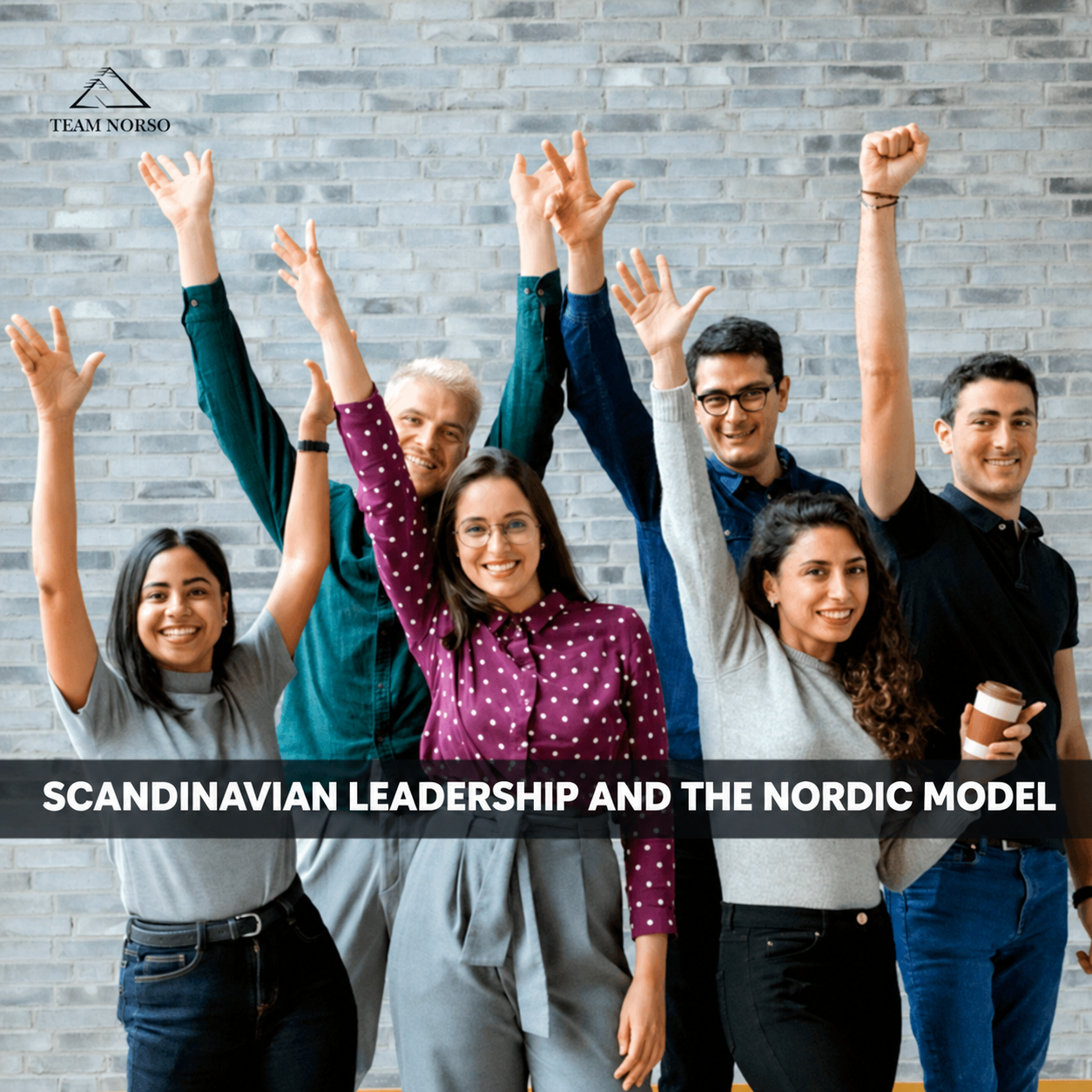
Scandinavian leadership is often associated with collaboration, trust and employee participation. It is more than a set of management techniques: it has developed within a wider social and cultural context.
This article explores how the Nordic model has influenced working relationships and what that can mean for leadership.
A social foundation
The Nordic model developed during the twentieth century, combining a market economy with social protection and cooperation between institutions and working-life stakeholders.
In the workplace, this helped support expectations of openness, shared responsibility and dialogue between employers and employees. Scandinavian leadership reflects that background through participation, relatively flat hierarchies and attention to people.
Culture shapes practice
Egalitarian values encourage people at different levels to contribute to decisions. Participation can strengthen ownership and responsibility.
Trust supports autonomy. When leaders allow employees to use judgement, people have more room to propose ideas and take initiative.
Attention to life outside work also influences practice, including flexible arrangements and respect for personal commitments. This can support a more sustainable working environment.
These are broad tendencies, not a description of every Scandinavian workplace.
Why participation matters
People who contribute to decisions can bring useful knowledge and become more invested in implementation. Trust can make it easier to speak openly, cooperate and address disagreements.
Balancing work with other aspects of life can help support satisfaction and continued participation. The model seeks to combine performance with a human approach to leadership.
Shared responsibility
Employee participation is not simply receiving freedom from a manager. It involves contributing to the organisation, taking responsibility and engaging with others.
The relationship between leadership and employees therefore matters as much as any formal structure. Flat hierarchies without clear expectations, or autonomy without support, do not automatically produce good results.
Applying the perspective internationally
The useful questions are how trust is established, how employees contribute and how responsibility is made clear in your own context. Different cultures and organisations may need different ways to make those principles work.
The Scandinavian perspective offers a way to discuss performance, participation and sustainable working life together.
Source discussed in the Norwegian article: Johan Velten and Runar Heggen, Tillitsbasert leder- og medarbeiderskap (2022).
English editorial adaptation of the Norwegian original.
Bring the ideas into your organisation.
Talk to us about your leadership, team or recruitment challenge.
Book a conversation ↗