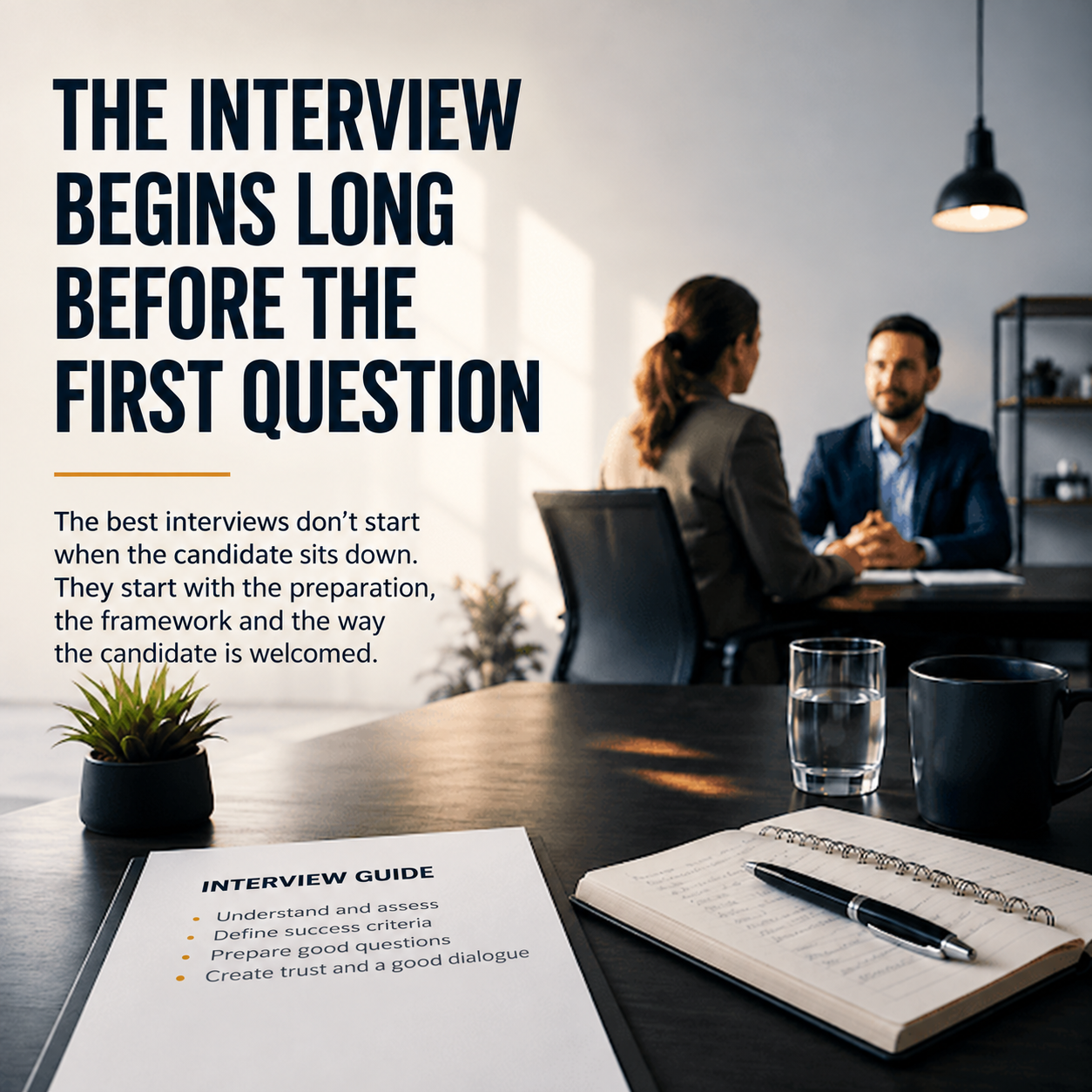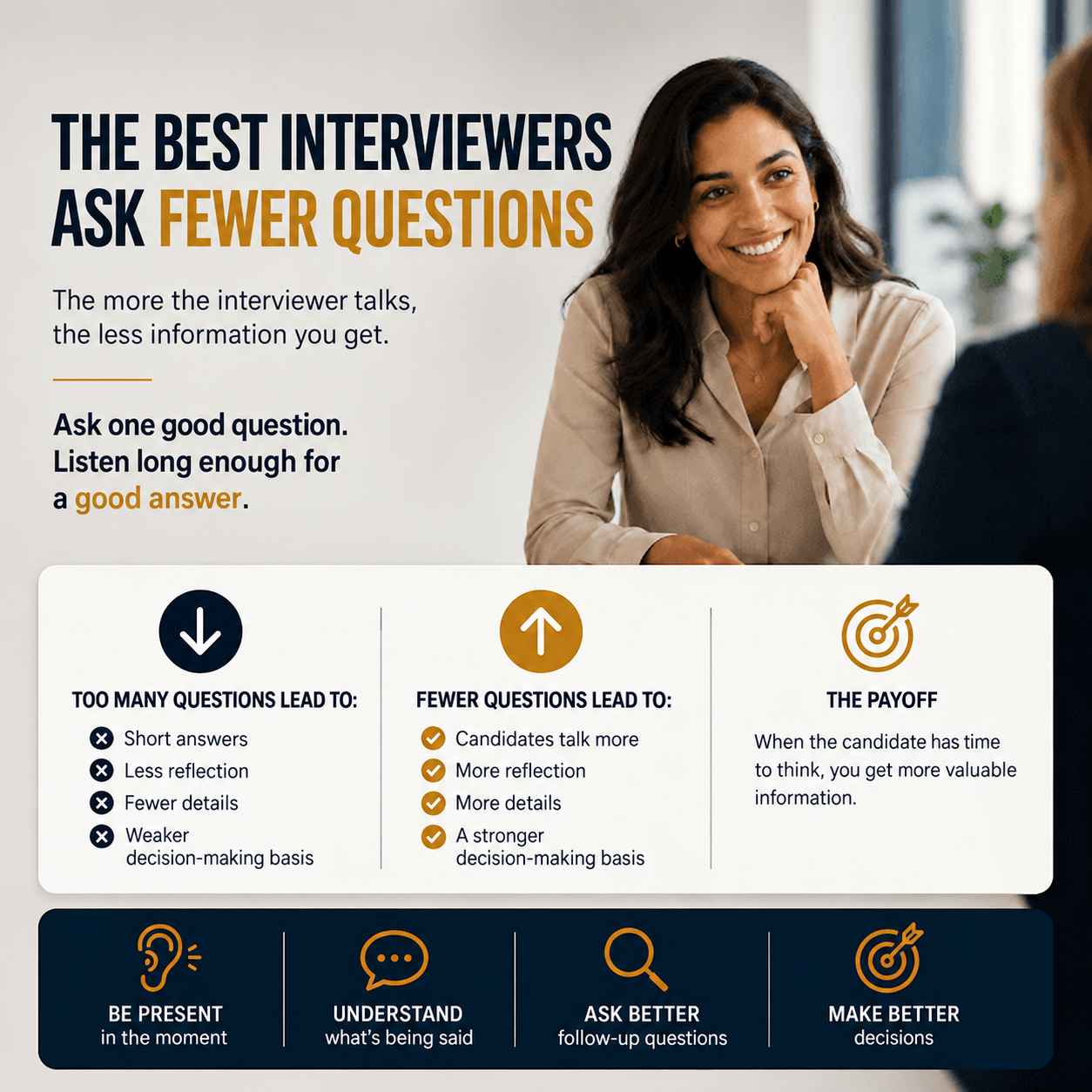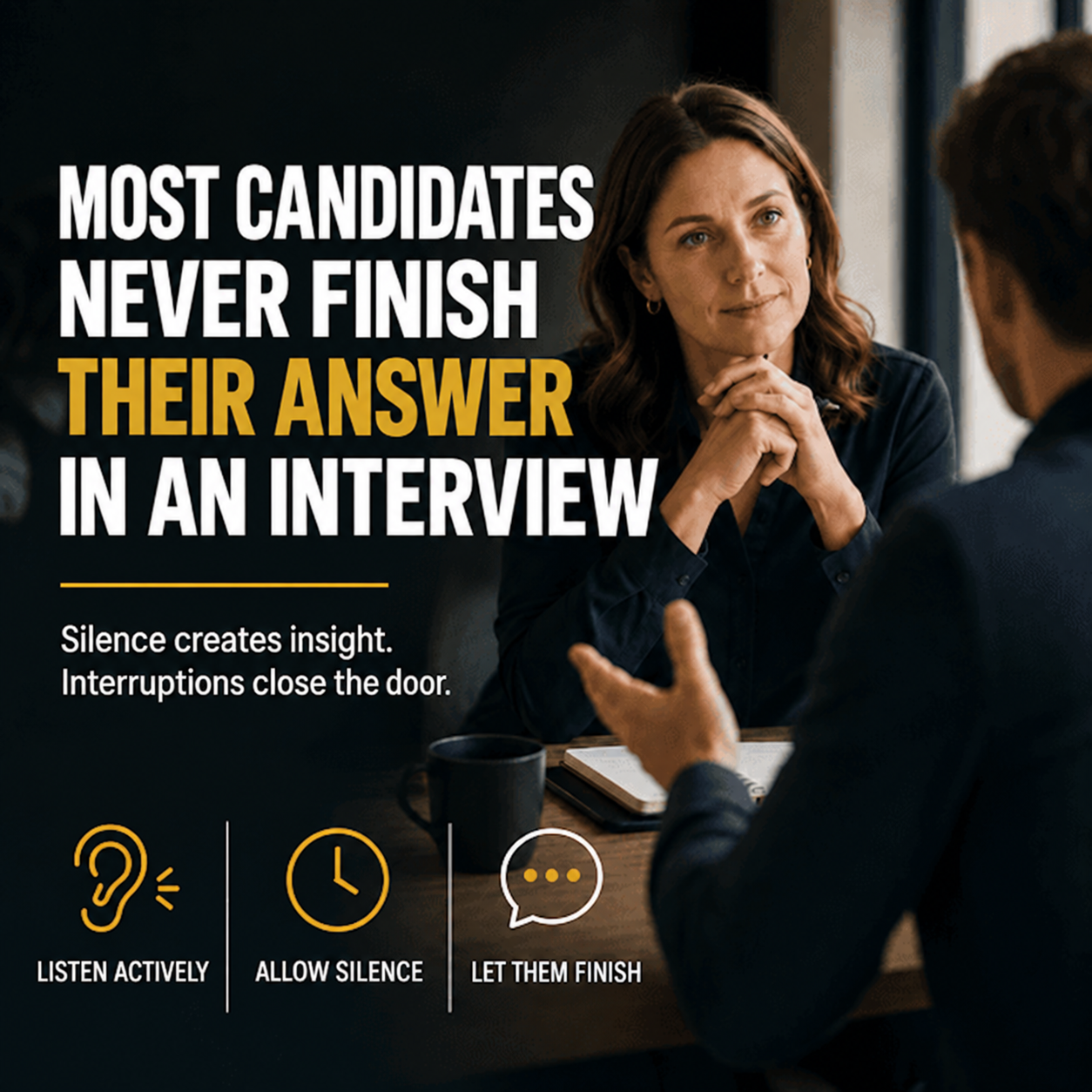

Leaders and recruiters spend considerable time planning and conducting interviews. They discuss questions, reserve time and invest resources in meeting candidates. One phase often receives less attention: the moment the candidate stands up, says thank you and leaves.
That is when an essential task begins.
A good interview does not automatically produce a good hire. At best, it produces information. Its value depends on how that information is understood, assessed and used. Evaluation matters as much as the conversation.
After an interview, most people have a feeling: the candidate seemed confident or uncertain, the chemistry was good, the conversation flowed, or something felt wrong. Those feelings are not facts.
A project manager may be sociable, confident and likeable without giving concrete examples of handling conflict, deciding under pressure or addressing underperformance. Hiring on the positive experience alone would substitute an impression for evidence.
The reverse can happen too. A nervous candidate who takes time to find words may offer more relevant capability and reflection than a polished, immediately likeable candidate.
What did we learn?
Good evaluation separates what we felt from what we learned. The first question should not be “What did I think of the candidate?” but “What did I learn about the candidate?”
The former invites subjective impressions. The latter directs attention to information shared and evidence that can be examined.
Imagine a three-person panel recruiting a department head. One describes the candidate as trustworthy, another as ambitious and the third as a team player. These observations may be reasonable, but do not establish suitability. How do capability and motivation connect with the job analysis and add value here?
Continue with more specific questions:
- Which concrete examples are relevant to our needs?
- What evidence supports the claims, and what requires further investigation?
- Which role requirements have been explored adequately?
- Where do we still know too little?
This builds a basis for the next stage. A good selection process usually needs more than an interview alone.
Do not confuse chemistry with competence
“Would you like to work with this person?” is understandable. Nobody wants unnecessary conflict. But it becomes risky if it dominates evaluation.
We often like people who resemble us, communicate similarly and support our perspectives. Familiarity can be mistaken for capability.
Some impressive interviewees later fail to meet expectations. Additional selection methods can change an initially enthusiastic judgement. Conversely, candidates who were less charismatic may become valuable colleagues.
Evaluation should move attention towards relevant performance and structured assessment.
What we know and what we assume
Divide observations into two categories: what we know and what we believe. We may know someone has led 20 employees when they can describe the experience concretely and it is documented. We believe they will lead effectively in our organisation.
Problems arise when those categories merge. We assume someone will fit, handle pressure or work well in our culture. Sometimes the assumptions hold; sometimes they do not.
Recognising the difference between information and interpretation improves decisions. An interview often clarifies what we must investigate next rather than delivering a final conclusion.
Evaluate your own interviewing
Skilled recruiters evaluate the process as well as the candidate:
- Did we obtain the information we needed?
- Were the questions useful?
- Did the candidate have time to finish?
- Did some topics crowd out others?
- Did the first impression steer the conversation?
This takes professional confidence and humility. Reflection helps some interviewers improve while others repeat the same mistakes. Evaluation also develops your ability to gather and understand information.
The purpose of an interview is a sound basis for decisions. Without systematic assessment, the conversation may merely confirm an existing gut feeling.
Strong recruitment processes analyse, discuss and assess information afterwards in a structured way. A contribution from someone who was not in the interview can also be valuable.
Continue exploring our insights to develop your interviewing practice.
English editorial adaptation of the Norwegian original.
Bring the ideas into your organisation.
Talk to us about your leadership, team or recruitment challenge.
Book a conversation ↗