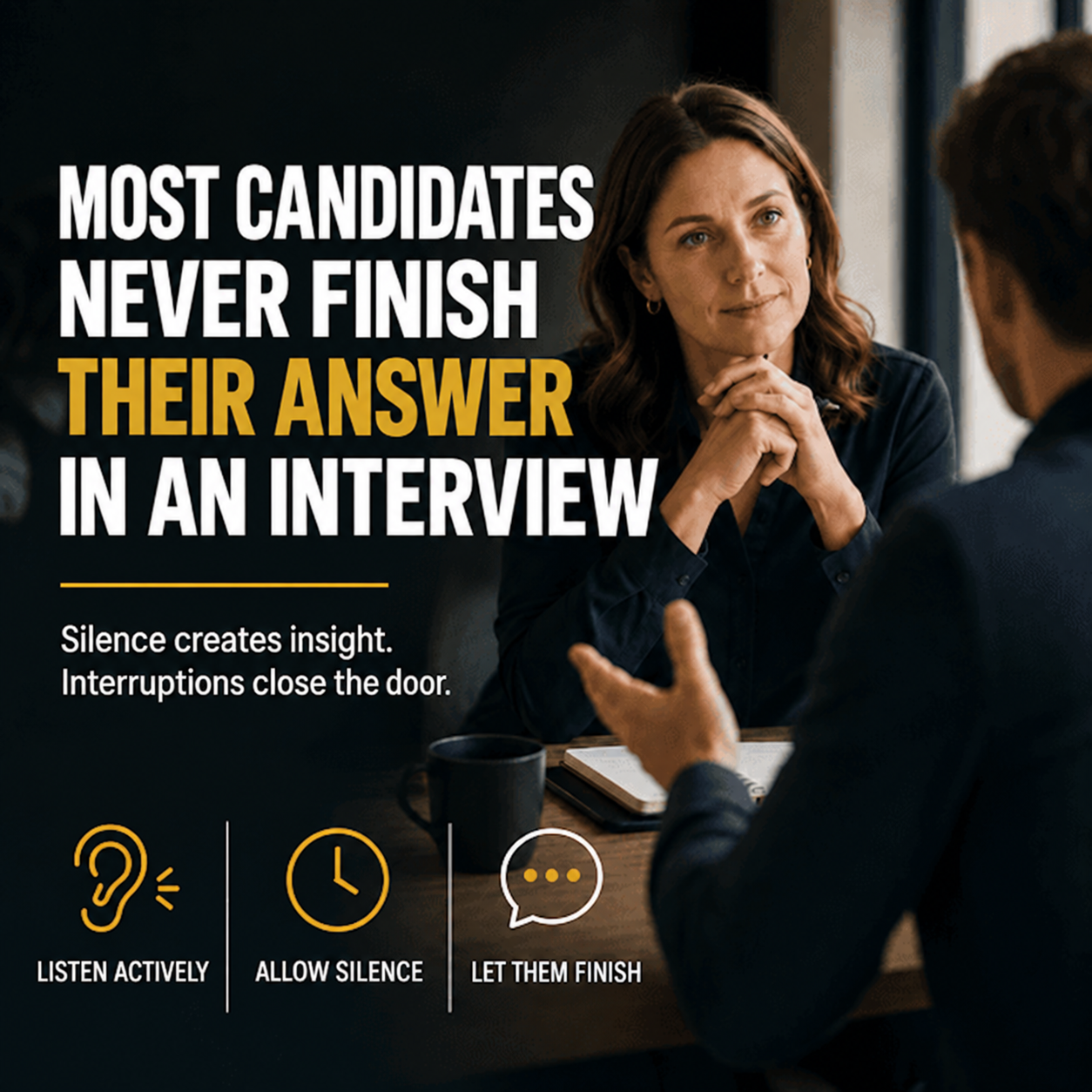
We may not think about it much, but it happens more often than we like to admit. A candidate receives a question and begins answering. Before their train of thought is complete, another question arrives, someone interrupts or the conversation is steered elsewhere.
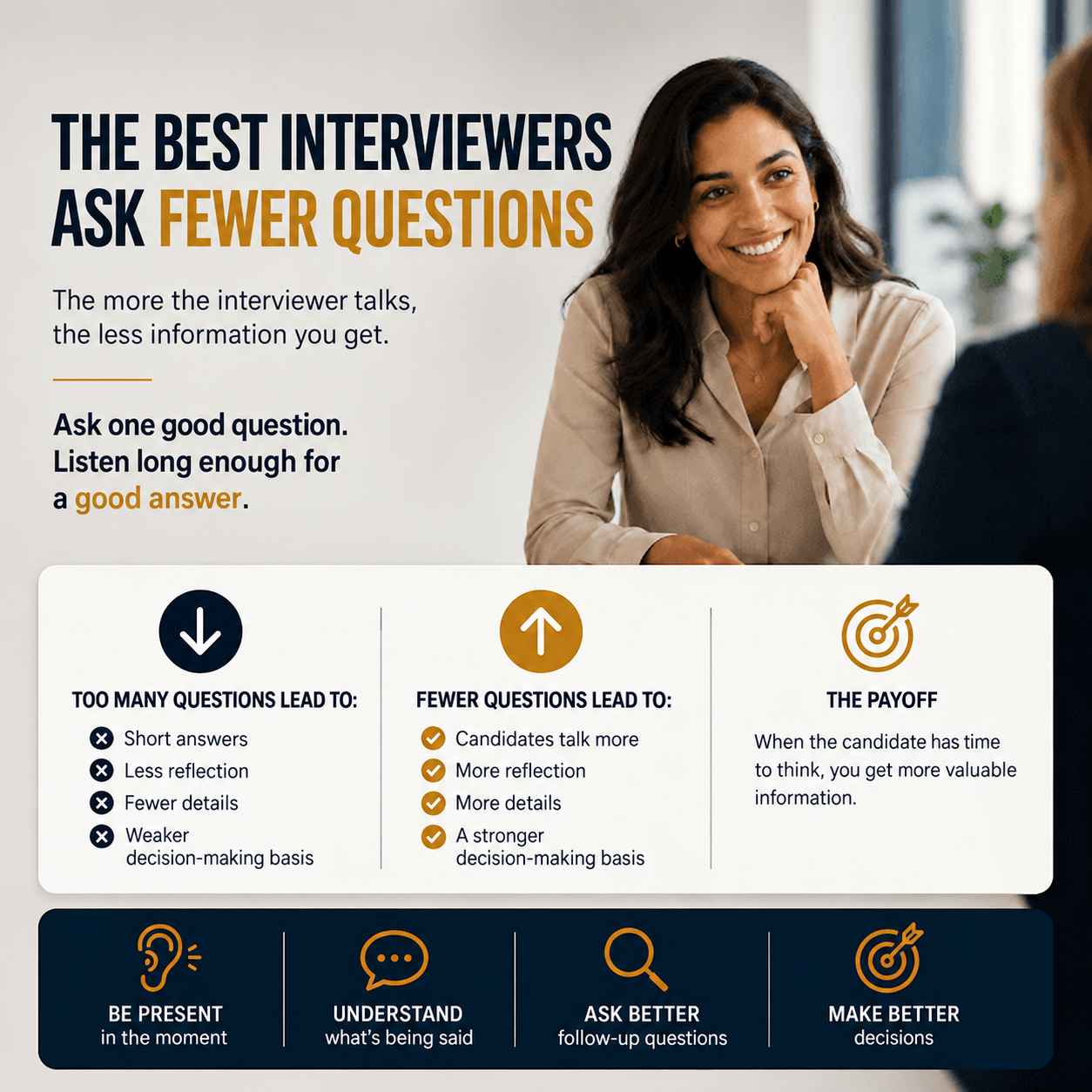
The intention is rarely bad. The interviewer wants to make progress, cover every question or believes the next question will produce a better answer. The problem is that the opposite happens. The moment you interrupt, you stop the candidate’s reflection.
A good interview is not primarily about the questions you ask. It is about what you do after asking them. The space after an answer begins, and particularly the silence that follows, helps determine the quality of the interview.
Given time, candidates often move beyond their first, slightly rehearsed response to something more considered. They search their experience, connect events and explain what actually happened. This is where nuance and insight emerge.
Move on too soon and you are left with the first layer: an answer that sounds good but is often general and imprecise. You have a story without necessarily understanding what lies behind it.
Many interviewers fall into this trap because they have been told interviews should be structured. That is right: structure is essential for comparing candidates and making good decisions. But structure does not mean being locked into a list of questions regardless of what happens in the conversation.
If completing your questions becomes the priority, you miss what happens along the way. You stop listening actively and start thinking about your next question. You lose both what is being said and what might have been said with a little more time.
Active listening is therefore more than a soft skill. It is a discipline. It requires mental presence, tolerance of silence and enough confidence in your role to let someone finish, even when it takes longer.
Silence can feel uncomfortable for both people. Yet that discomfort can move the conversation forward. In trying to fill the silence, candidates often provide more information. The conversation moves beyond prepared answers towards real experience.
The practice required is easily underestimated. Interviewing only a few times a year makes it difficult to become skilled. Holding back your impulses, avoiding interruptions and remaining actively engaged all require training.
The best interviewers are flexible. They have structure without being controlled by it. They use what the candidate says in the moment to ask better follow-up questions, allowing the conversation to develop without losing direction.
The difference is clear in practice. One interviewer gets answers to their questions. Another comes to understand how the candidate actually works.
When an interview falls silent, what do you do? Do you listen, or start speaking again?
This is a skill you can train. Contact TEAM NORSO to develop your interviewing practice.
English editorial adaptation of the Norwegian original.
Bring the ideas into your organisation.
Talk to us about your leadership, team or recruitment challenge.
Book a conversation ↗