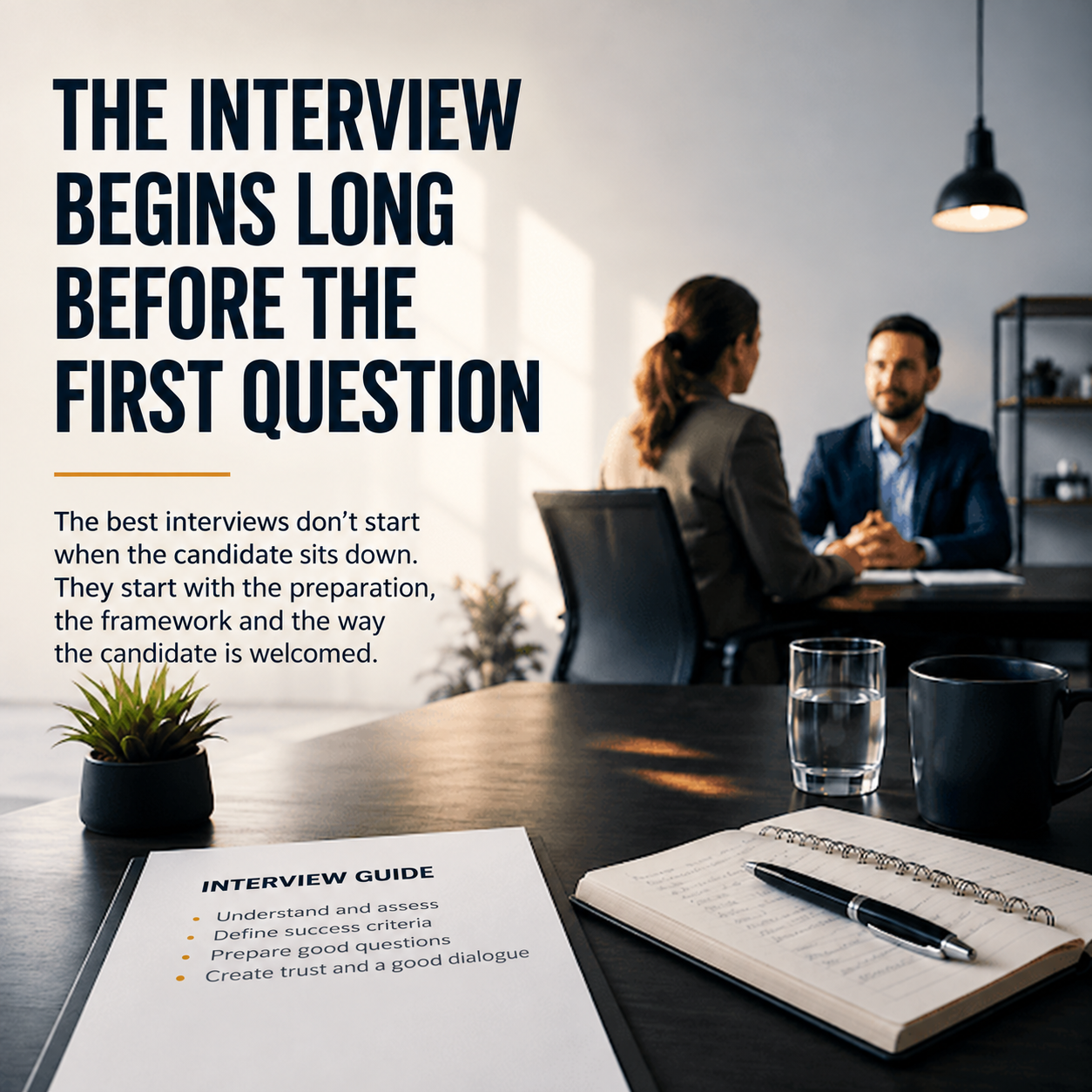
Much discussion of job interviews focuses on questions: competency questions, follow-up, structure and assessment techniques. We teach interview delivery ourselves, so the conversation certainly matters. Yet another factor is often just as important: everything that happens beforehand.
An interview is a meeting between people in which information is shared, trust develops and important decisions will eventually be made by both sides. Preparation, the setting and the welcome affect that meeting well before the first question. Professional interviewing starts before anyone speaks.
For a candidate, this may represent a job change, a new career direction, financial security or an opportunity to use their skills more fully. They arrive with expectations, hope and uncertainty.
They assess the whole experience. Was communication timely? Was the process thought through? Were they welcomed properly? Did the interview start on time? These details shape their view of the organisation and its representative.
An interview can be an outsider’s strongest encounter with a business. A polished website or professional job advertisement may matter less than how the interview feels when the candidate decides whether they want to work there.
Preparation enables flexibility
Some interviewers prepare carefully. Others skim a CV five minutes before the candidate arrives. The difference can be larger than expected.
Without preparation, it is hard to know what to investigate and how. Questions may be interesting rather than relevant. You jump between topics, follow first impressions and finish with many impressions but little concrete evidence.
Planning is not writing a hundred questions and rigidly following them. It means understanding the role, identifying the capabilities that matter and deciding how to examine them. This makes the interview more flexible and precise. You can listen, follow useful leads and spend less energy thinking of the next question.
The most natural interviews are often the best prepared. A good plan makes it easier to improvise.
Remove unnecessary obstacles
Interviewers may conduct these conversations regularly. Candidates are in a different position. Even experienced leaders and specialists can feel nervous.
Uncertainty and stress can affect memory, reflection and precise expression. Perhaps you have left an interview and immediately remembered everything you meant to say.
Interviewers should create conditions that help candidates demonstrate their actual capability. That does not mean making the conversation uncritical. It means removing unnecessary obstacles and distractions. When people understand the process and feel respected, relevant information is more likely to emerge.
The setting communicates
Compare a quiet meeting room with one where phones ring, people enter and leave, and the interviewer keeps checking a screen. The questions may be identical; the experience and conversation will not be.
The physical setting signals whether this meeting matters or is merely another calendar entry. It affects attention, concentration and professionalism. Consider the location as carefully as the questions. How would you normally receive a guest?
First impressions do not begin with a handshake or the start of a video call. They are already developing through email wording, response times, reception and introductions. The handshake reinforces or changes an existing impression.
The same applies to interviewers. We begin forming opinions before the conversation, so we must recognise assumptions and biases. Understanding how early impressions arise helps us stay open and revise our judgements as evidence develops.
Treat the candidate as a guest
Beneath the models and techniques lies respect for the person you are meeting. Treat the candidate as a guest who is preparing to visit and then arrives.
Respect appears in preparation, punctuality, clear communication, sufficient time and listening. It means doing your best to provide conditions in which the guest can show their competence.
An interview may appear to begin with the first question. In reality, much of its quality is shaped before that moment. It starts with preparation.
English editorial adaptation of the Norwegian original.
Bring the ideas into your organisation.
Talk to us about your leadership, team or recruitment challenge.
Book a conversation ↗