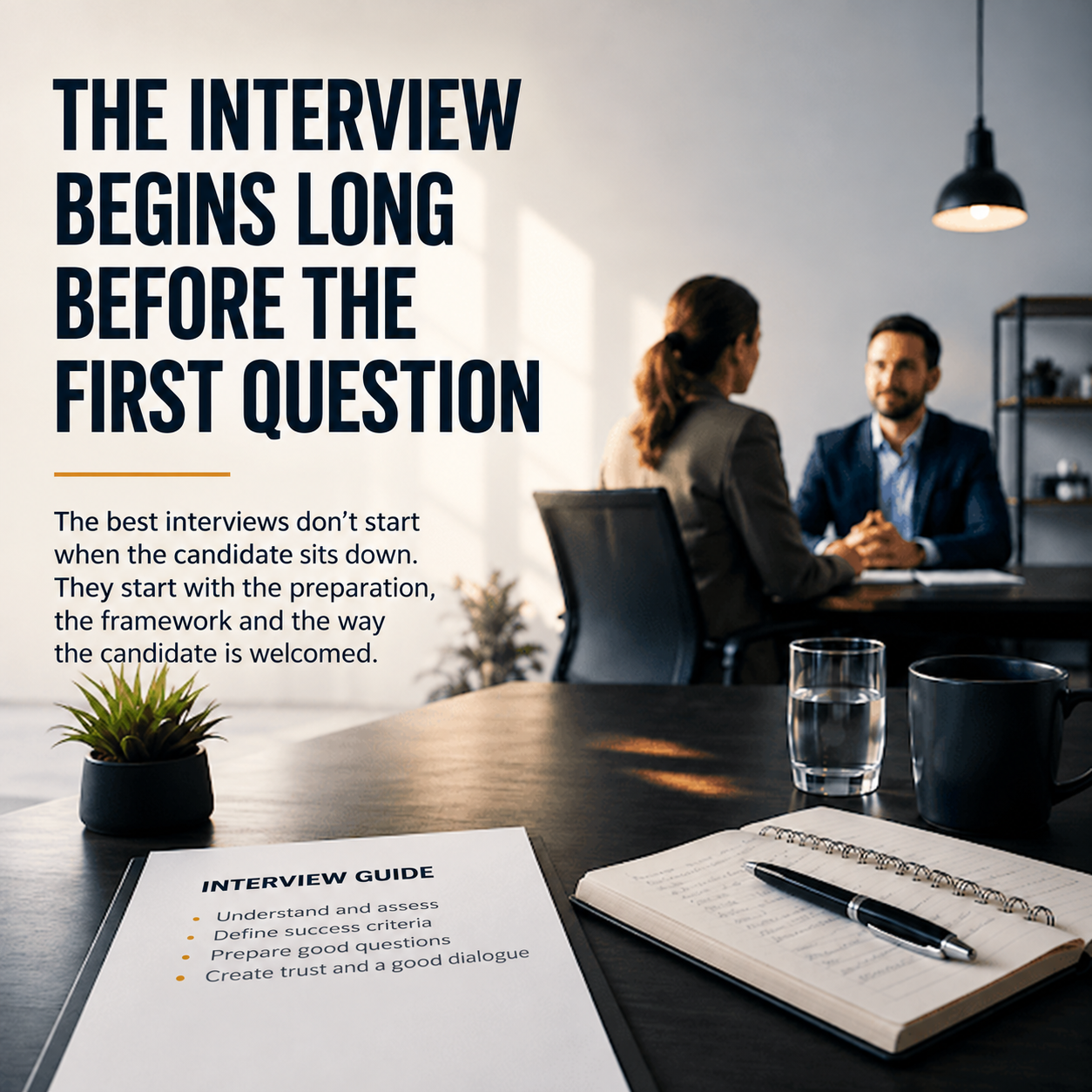
Advice on interview technique often centres on which questions to ask. The internet is full of lists of the best, hardest and most effective interview questions. I have even written an interview handbook covering this subject.
It is easy to conclude that interview quality depends on inventing good questions. After years of recruitment, leadership development and formal investigative interviews, I have reached a different conclusion. One of the most common mistakes is not asking poor questions. It is asking too many.
Many interviews become a game of ping-pong: question, answer, another question, another answer, perhaps a question from the candidate. It looks efficient. You work through the guide, cover many topics and feel you have gathered a great deal.
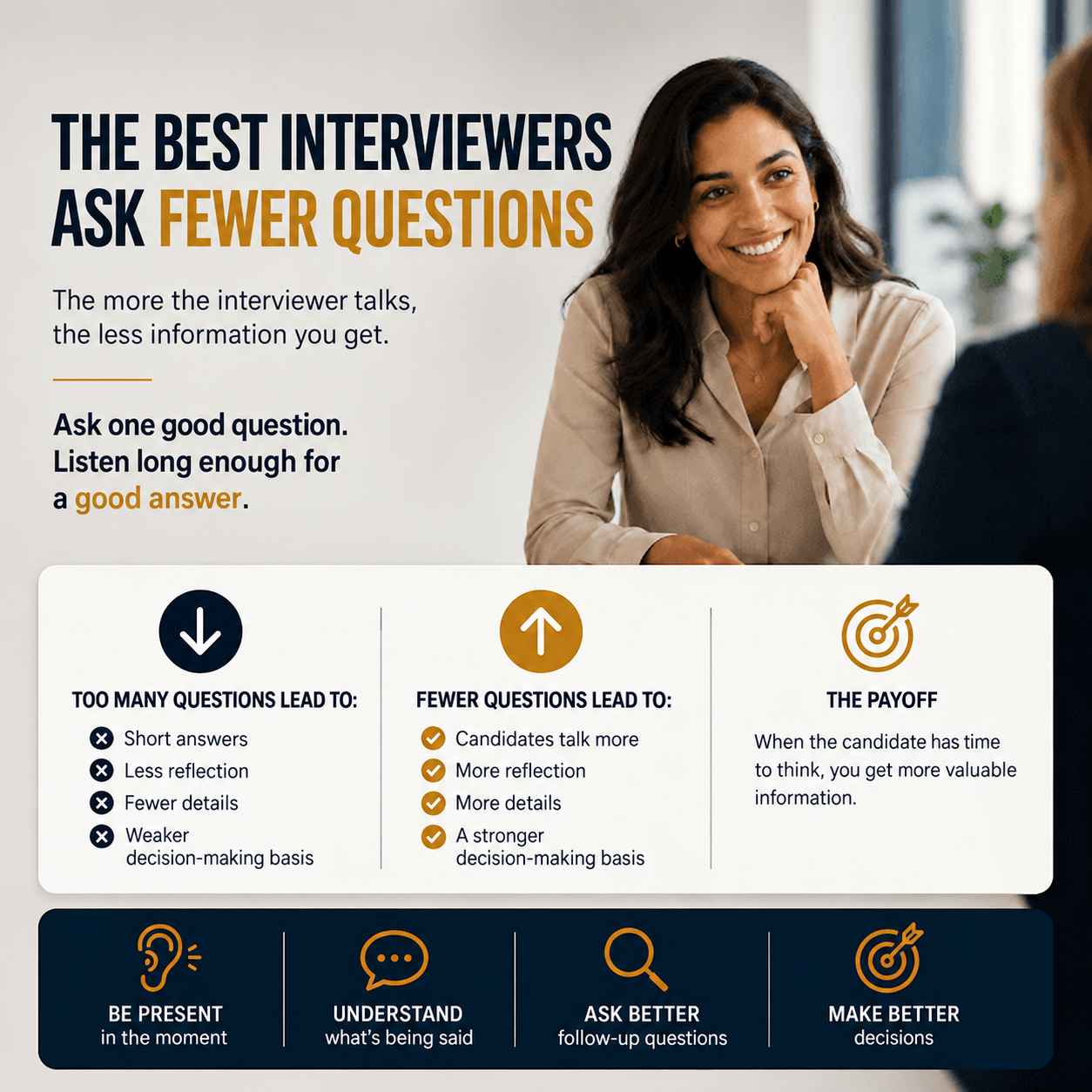
In practice, each new question takes control of the candidate’s train of thought. They have less time to reflect, retrieve memories and explain their experience. Answers can become shorter, less detailed and less reliable.
Remembering takes time
We overestimate how easily people retrieve experiences. Candidates do not have every answer ready. To describe a situation from years ago, explain a difficult task or recall a conflict, they must connect memories, events, people, emotions and details before formulating a useful response.
Constant questions interrupt this work. We may get an answer to the question while missing the information we actually need. The goal is not to complete our question list. It is to gather relevant, accurate and detailed information for a sound decision.
Most interviewers feel an urge to fill silence. A pause feels uncomfortable. Some assume the candidate has finished; others worry that the conversation is losing momentum or becoming awkward. They hurry to another question.
Yet silence can indicate that something valuable is happening. The candidate is thinking, searching for details and trying to remember. Just when you most want to speak, they may be close to sharing the most useful information.
The best interviewers are comfortable with silence because reflection takes time. They do not aim to make candidates uncomfortable. They understand that saying less can improve the conversation.
Invite a fuller account
Good questions remain essential. The difference is how we use them. Instead of gathering information by asking many questions, help the candidate tell you more.
Rather than asking “What did you do?”, “Why?”, “How did it go?” and “What did you learn?” as four separate questions, invite a complete account and follow up on what emerges. The candidate can build their own narrative and offer details you might never have thought to ask about.
The more the candidate speaks, the more opportunities you have to notice connections, identify themes and ask precise follow-up questions. The more you speak, the less room remains for them.
Some interviewers also become preoccupied with their own performance. They want to appear professional, prepared and competent. Understandably so, but this can make them occupy too much of the conversation. The guide takes priority over the emerging information.
A good interview requires curiosity, presence and listening to what is actually said, rather than waiting for the next opportunity to ask something.
Some of my best interviews have contained surprisingly few questions. They have instead involved substantial listening, rich detail and enough time for candidates to finish thinking before moving on.
Try a small experiment
At your next interview, ask one good question. Invite the candidate to explain. Sit back and listen. When they pause, wait a few extra seconds. Do this because you are interested in whether more information is available, rather than mechanically following a technique.
Sometimes nothing more follows. Often it does.
Interview quality is rarely determined by the number of questions. It depends on the relevant, accurate and detailed information you uncover. Sometimes fewer questions are the best way to learn more.
English editorial adaptation of the Norwegian original.
Bring the ideas into your organisation.
Talk to us about your leadership, team or recruitment challenge.
Book a conversation ↗