Active listening is one of the most frequently used ideas in communication. It is also one of the most misunderstood skills, and often one of the least effectively practised in job interviews.
Most interviewers believe they listen. They sit quietly, nod, pay attention and let the candidate speak. That is not necessarily the same as listening actively.
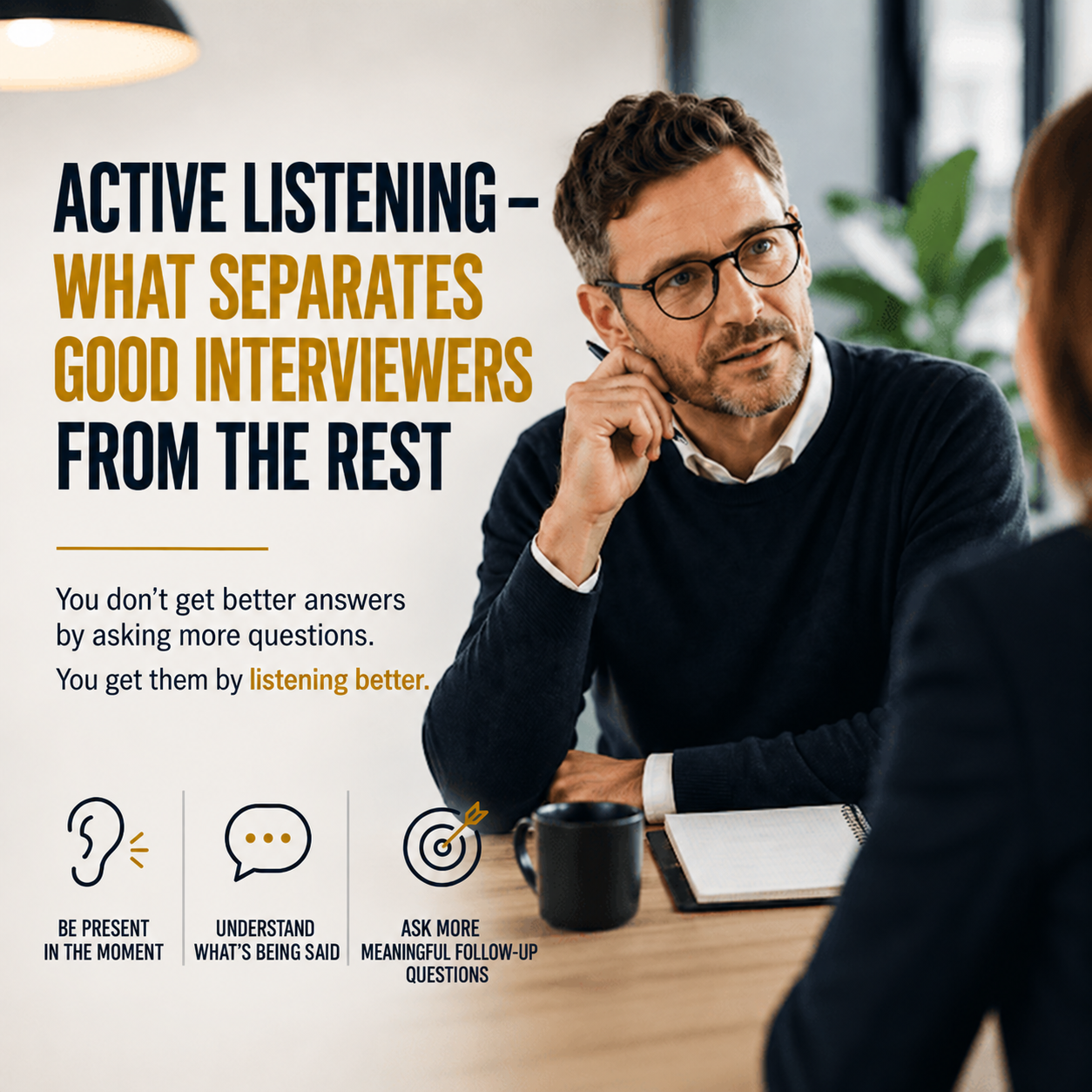
Active listening is not about staying silent. It is about being mentally present in what is being said and using that information to develop the conversation.
In an interview, you do more than register an answer. You try to understand what lies behind it. What does the candidate mean? What did they actually do? What is missing from the account? This requires discipline as well as attention.
While a candidate speaks, the interviewer’s mind often moves on: What is the next question? Have I covered everything? How much time is left? Focus shifts away from the information being shared and towards the interviewer’s plan.
Without active listening, your next question follows your plan rather than the candidate’s answer. You complete the interview without gaining insight. You may leave with impressive phrases but a weak basis for a decision. Someone can sound clear and reflective without showing you how they work in practice.
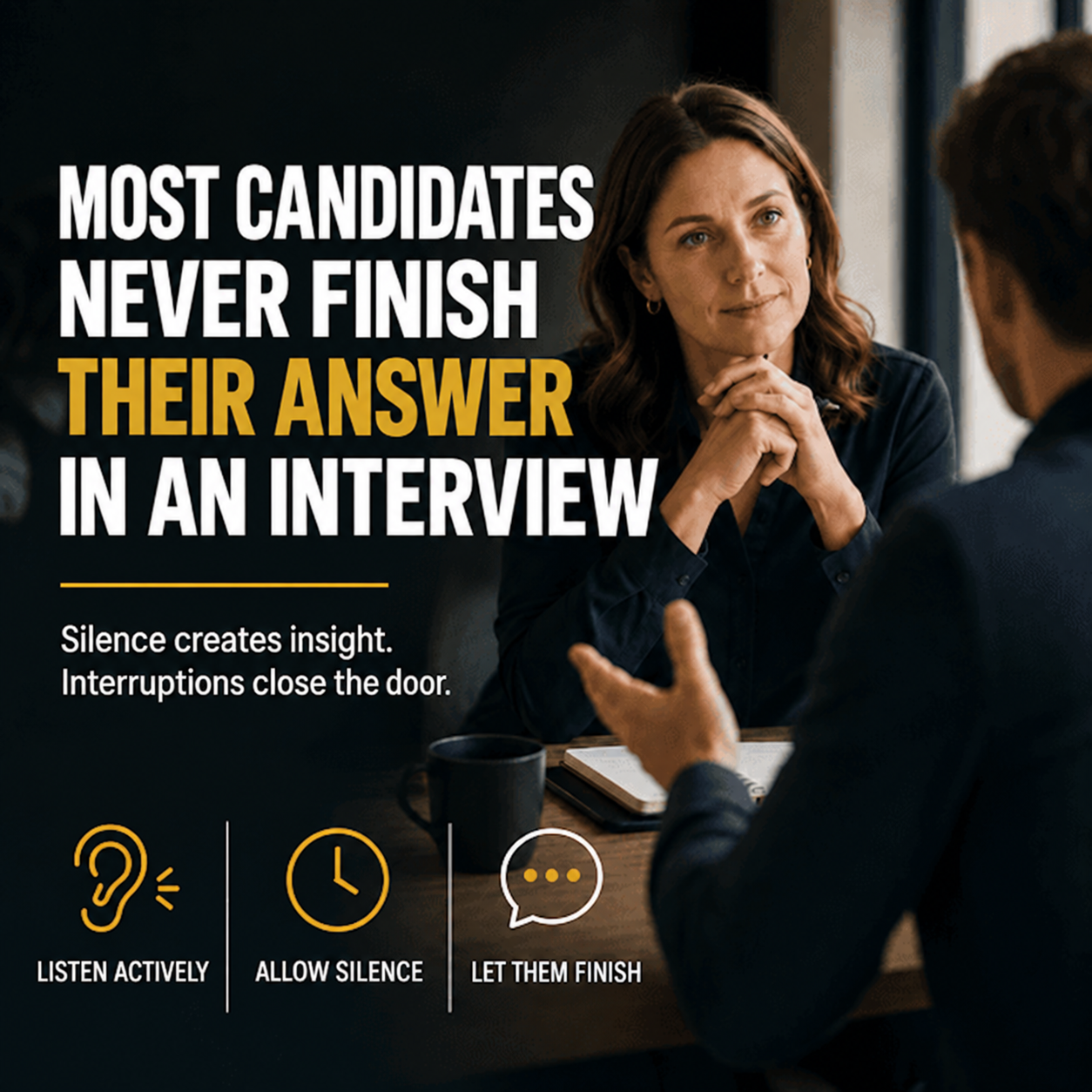
Active listening is closely connected with silence. If you listen carefully, you notice that an answer is not always complete when a candidate stops speaking. More often follows if you allow time. These moments can reveal information that has not been prepared or rehearsed, offering insight into how the person thinks and acts.
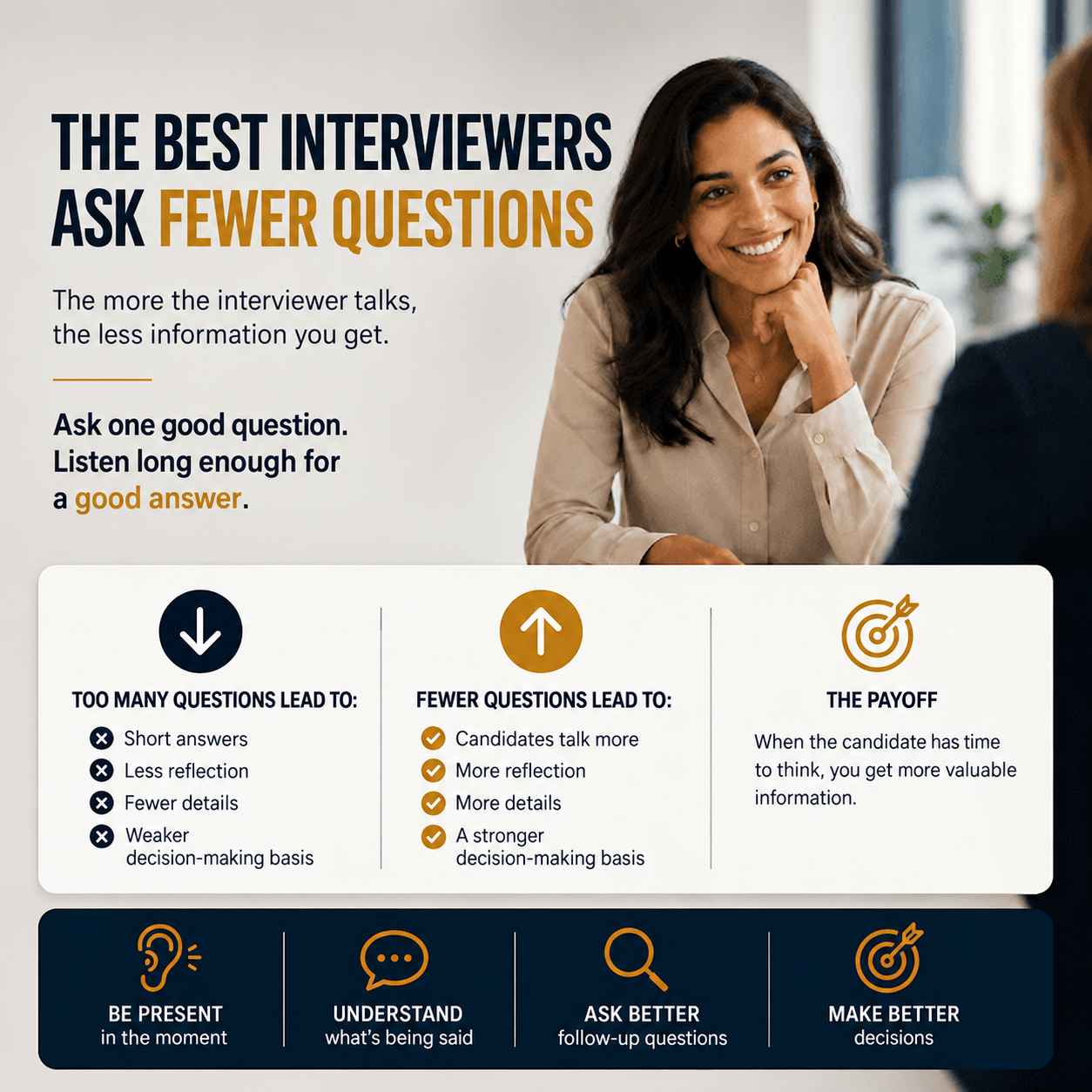
Many people try to solve this by asking more questions. Our experience points in the other direction: often you need fewer questions and better follow-up.
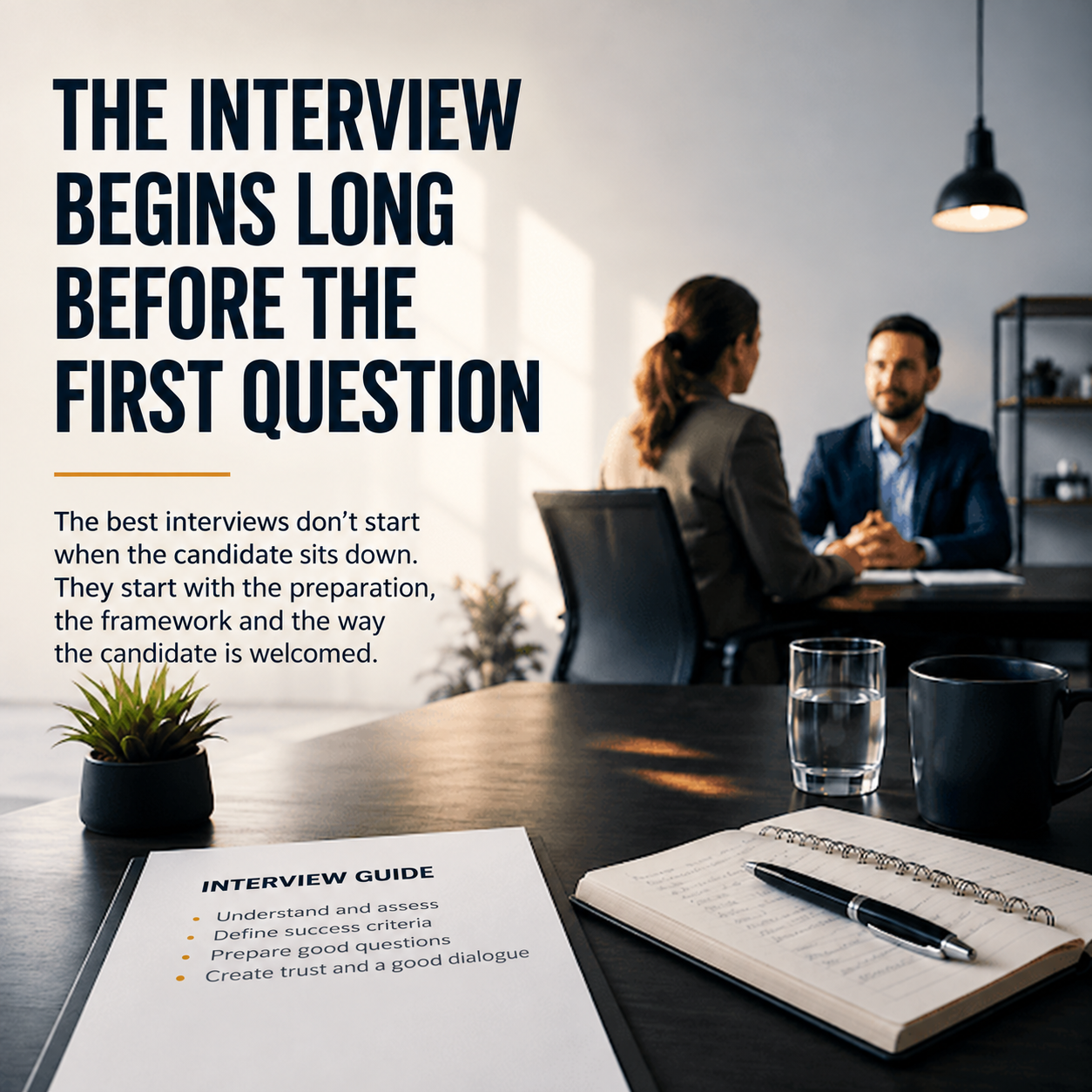
The best interviewers have a clear underlying structure without allowing it to dominate the conversation. They use what the candidate says to decide what happens next. They tolerate silence, maintain focus and go deeper where necessary.
One interviewer completes an interview and obtains answers. Another listens actively and understands how the candidate thinks. That difference matters to hiring quality.
This skill must be practised. If you work in HR, leadership or recruitment and want more precise interviews, contact us. We help you develop the structure, skills and confidence to uncover what matters in a hiring decision.
Our AnchorView™ training and certification equips you with tools and knowledge for interviewing candidates.
English editorial adaptation of the Norwegian original.
Bring the ideas into your organisation.
Talk to us about your leadership, team or recruitment challenge.
Book a conversation ↗