
The Employer Must Pass the Interview Too
A candidate asks why the previous employee left. She then asks what happens when the workload exceeds the hours available, and which decisions she can make without seeking approval. After the interview, she is described as demanding. She asked a lot of challenging questions. Perhaps she would not fit in.
But what exactly did the candidate do wrong? She examined the workplace she was considering committing several years of her life to. She tried to understand the expectations, the leadership and the conditions she would need to succeed. If that makes her less attractive as a candidate, the employer should examine its own judgement before concluding that she is the problem.
An invitation to interview is not a favour
There is an imbalance in the way we often talk about job interviews. The candidate is expected to prepare, demonstrate motivation, answer well and persuade. The employer is expected to assess. This division has a practical explanation, since the organisation is making the hiring decision. It becomes a problem, however, when candidates are expected to be grateful for the invitation and cautious about what they ask. An invitation to interview is not a favour. The organisation has a need and is exploring whether the candidate can help meet it.
The employer decides who receives an offer. The candidate decides whether to accept. The two parties have different roles and may have very different levels of choice, but both need sound information on which to base their decisions. For the employer, this means understanding the candidate’s competence, capacity and ability to do the work. For the candidate, it also means understanding who she will work for, what will be expected of her and whether the workplace will enable her to do a good job.
Someone who already has a secure job may have time to weigh their options. Someone who has been unemployed for months may face very different pressures. That is why “you don’t need the job” is too simplistic as advice. Some people need it badly. This does not diminish the value of their skills or make their need to examine the employer any less legitimate. Those of us involved in recruitment should make room for that examination, including when candidates are reluctant to ask.
When good questions count against a candidate
Consider this hypothetical situation. Maria is interviewing for a project manager position. She has relevant experience, and the employer has already explained that the organisation wants people who take responsibility, challenge established practices and speak up when something is not working. Maria therefore asks how the manager handles disagreements about priorities. She also asks for an example of an employee challenging a decision and influencing the outcome.
The manager replies that the door is always open and that people are encouraged to speak freely. Maria follows up: what does that look like in practice when an important delivery is at risk and the project manager believes the team is understaffed? The answer becomes less specific. Everyone has to contribute when needed. It is a busy environment, and people need to focus on solutions. Afterwards, the interviewers conclude that Maria appears technically strong, but they have concerns about her attitude. She seemed focused on limitations.
In this example, the candidate asked about matters directly relevant to the work. Yet her questions were interpreted as signs of weak motivation or limited flexibility. The employer risks rejecting precisely the judgement it claims to want. Asking for independent thinkers in a job advertisement is easy. The interview reveals what happens when that independence is directed towards the employer.
What is the assessment based on?
A candidate can, of course, be dismissive, disrespectful or poorly prepared. How questions are asked matters. But before recording “demanding”, “negative” or “not a good fit” in an assessment, we should be able to describe what the candidate said and did, and explain why it matters for the role. Was she condescending towards others? Did she repeatedly interrupt? Or did she ask for a specific answer to a question we would have preferred to answer with a general statement about trust and flexibility?
We need the same discipline here as elsewhere in selection: separate observation from interpretation. “Asked how overtime is handled” is an observation. “Unlikely to go the extra mile” is an interpretation that requires further evidence. Asking for clarity about decision authority does not establish that someone is rigid, either. It may reflect experience of what happens when accountability for results exceeds the authority to influence them.
A useful question in the assessment meeting is therefore what the candidate’s questions reveal about the competence we are seeking. In a role involving priorities, risk or resources, noticing ambiguity and examining it may be relevant strengths. We should also ask whether another candidate would have been judged as harshly for asking the same question. Personal chemistry is a weak basis for deciding who is allowed to challenge us.
Employers must answer with the same precision
We routinely ask candidates to support their claims with specific examples. If they say they collaborate well, we want to know what they did when collaboration became difficult. If they say they handle pressure, we explore how they demonstrated it. Employers should meet the same standard. “We have a great culture” gives a candidate very little to assess. An example of how a manager handled a mistake, a conflict or an unrealistic deadline provides far more useful information.
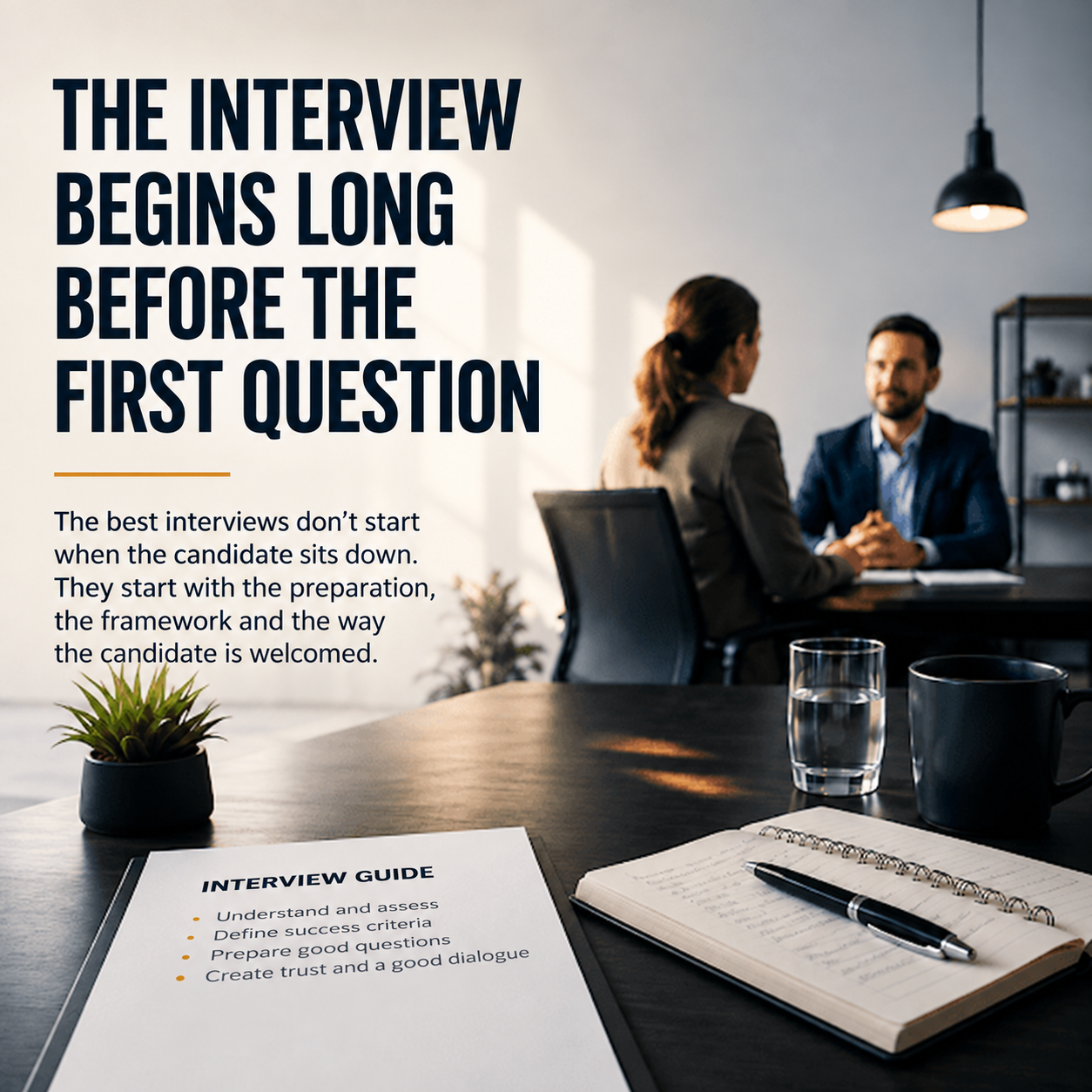
Interview preparation should therefore include the questions candidates may need to ask. Why is the position vacant? What will be difficult during the first few months? What should the person have achieved after six months, and what resources will be available? Who resolves competing priorities when everything is urgent? How does a new employee get help? If these questions are difficult to answer, the role may need further clarification before the next interview.
No employer has every answer. It is reasonable to explain that the structure is changing, that a priority remains unresolved or that onboarding has previously been too informal. What matters is that candidates understand the uncertainty, what the organisation is doing about it and what it could mean for the role. An honest answer gives them something to consider. A polished description postpones the discovery until after employment has begun.
Give candidates access to everyday working life
An interview with the hiring manager offers only one view of the workplace. Where relevant and practical, candidates can also meet a future colleague, see the working environment or discuss a typical assignment. The purpose is to help them understand how the work is done. They should be able to ask about collaboration, workload and expectations without every question becoming a hidden test of loyalty.
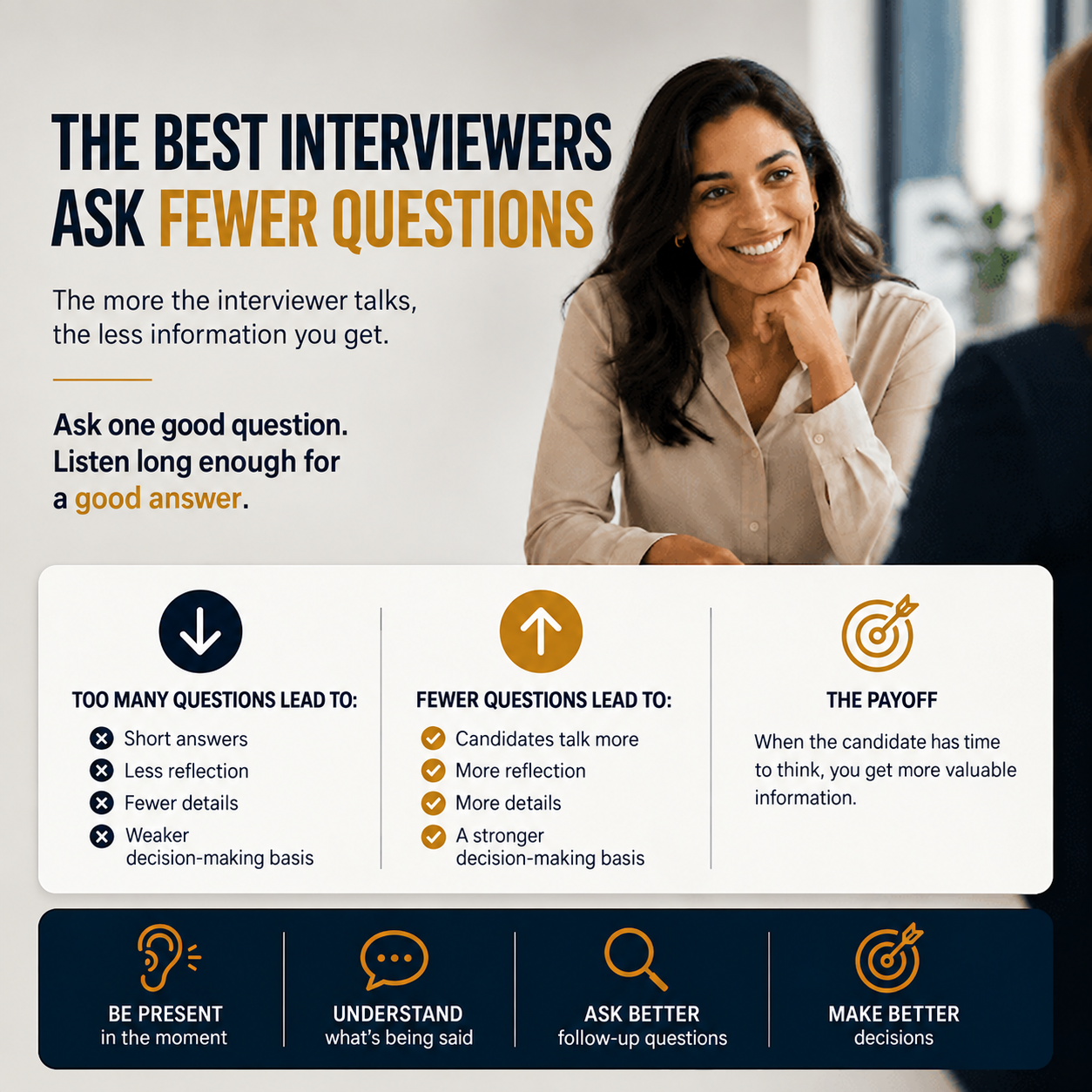
Allow proper time for candidates’ questions, too. The final three minutes of a long interview offer little opportunity to examine a decision that could significantly affect both work and personal life. Explain in advance which topics you will cover, who the candidate will meet and that you expect them to explore whether this is the right workplace for them. Mutual assessment then becomes part of how the interview is conducted.
This also means accepting that candidates may decline. A well conducted process can end with a suitable person discovering that the position does not meet their needs or aspirations. That can be useful information for both parties. If several candidates raise concerns about the same issues, the employer also has a reason to examine the role, the terms or the way the work is organised.
Can you handle the employee you say you want?
Managers and recruiters should be cautious about rewarding the candidate who makes the interview most comfortable for them. Agreement, praise and enthusiasm can be pleasant to receive. On their own, they tell us little about who will handle difficult assignments, raise concerns or stand their ground in a professional disagreement after joining. If the role requires someone to speak up, we must also examine our willingness to be challenged.
The next time a candidate asks a question that makes you uncomfortable, take a moment to examine the source of that discomfort. Perhaps the question reveals a weakness in the candidate. Perhaps it reveals something about the workplace that you need to address. The employer must pass the interview too. That starts with allowing candidates to find out whether you do.
English editorial adaptation of the Norwegian original.
Bring the ideas into your organisation.
Explore the relevant services and programmes or talk to us about your context.