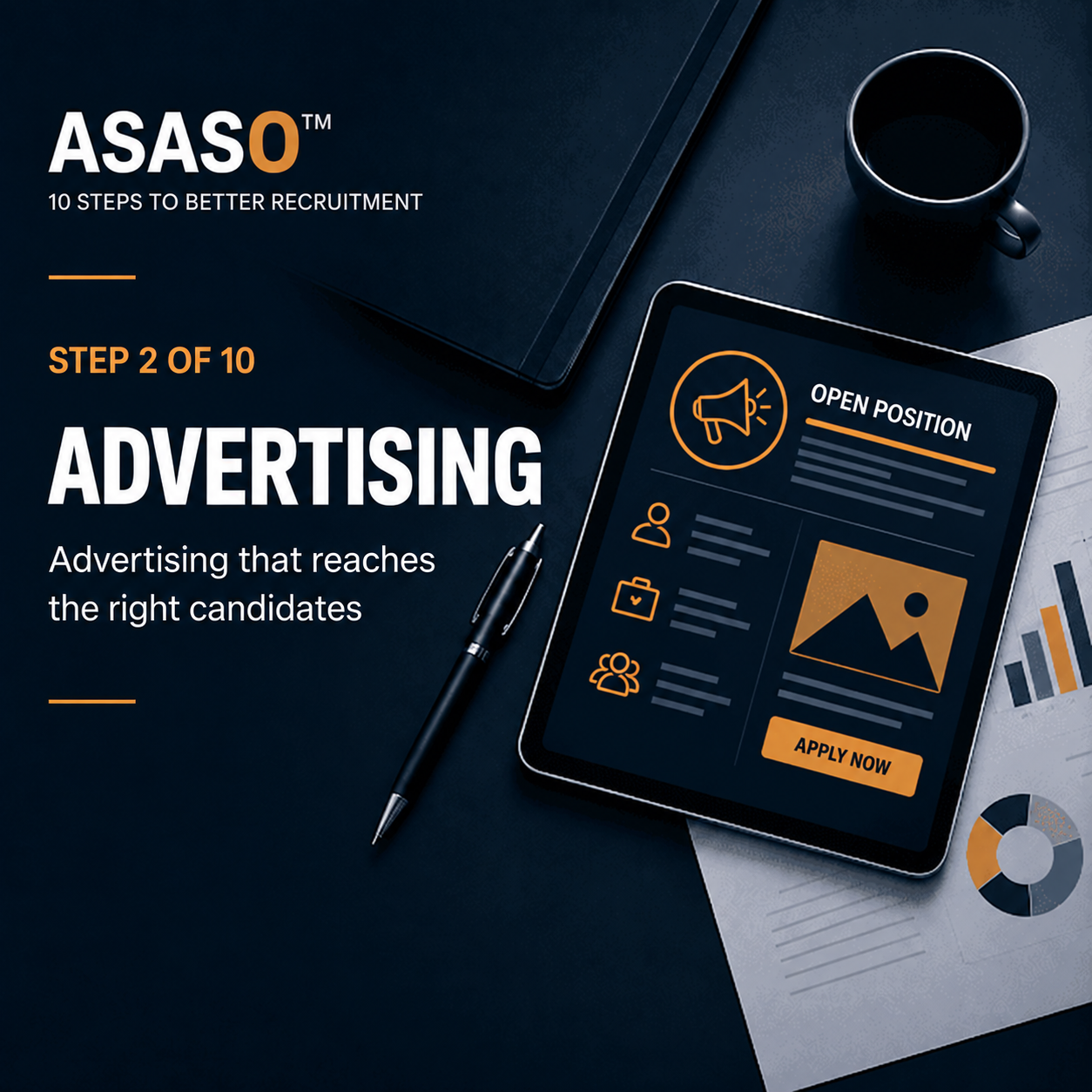
Advertising is the visible beginning of many recruitment processes, but it follows the less visible work of analysis. Only after understanding the role and the value a new employee must create can you communicate the opportunity precisely.
This second article in the ASASO™ series moves from analysis to communication. It focuses on the written foundation for advertising rather than the full discipline of recruitment marketing.
Give candidates a reason to care
Many advertisements explain what an employer wants but say little about why a capable person should want the job. They resemble purchasing lists rather than invitations to future colleagues.
An advertisement should communicate value without overselling. Candidates assess the tasks, culture, manager, development opportunities and daily experience as well as whether they meet the requirements.
If you describe only expectations, the candidate has an incomplete basis for choosing.
Relevant interest matters more than volume
A hundred applications are not automatically a success. If most cannot meet the real requirements, the process creates screening and communication work without improving the choice. Poor follow-up can also damage trust.
ASASO™ aims for fewer unsuitable applications, rather than maximum volume. That does not mean unnecessarily high barriers. It means enough precision for people to judge whether they could succeed and enjoy the work.
The labour market and your capacity matter. In a scarce-specialist market, an overly rigid advertisement may deter someone who could become effective after suitable training. Begin with requirements justified by the analysis, then adjust deliberately if the response calls for it.
Support informed self-selection
Strategic self-selection means helping candidates make a realistic choice before applying. A role with frequent changes and parallel demands may attract some people and deter others when described honestly. Both responses can be useful.
The advertisement should leave a professional impression even on people who decide not to apply. They may be relevant for another role later.
Open a conversation
An application is not the only useful outcome. A capable person already employed elsewhere may want to understand the role before committing to a formal process.
Make it easy to ask a question, email or arrange a call. Interest often develops through dialogue about the organisation, manager and opportunity. The advertisement should open that dialogue rather than attempt to replace it.
Follow the candidate’s questions
Start with why the role is interesting and how the work matters. Then explain responsibilities, expectations and necessary capability. Finish with practical details: the process, contact person and timing.
Not every detail from the job analysis belongs in the advertisement. Select what helps a candidate decide whether to explore further. The rest can follow in conversation.
Use complementary formats where useful
A short video of the manager, an employee interview or a dedicated information page may help people understand the workplace. Different formats can add context to the written description.
They do not replace personal dialogue. The first conversation still matters to whether interest grows or disappears.
Use AI after the analysis
AI can help organise material, improve wording and suggest structure. It cannot know the organisation’s needs and culture unless these are supplied accurately.
Without analysis, polished output can remain generic. The organisation must contribute the strategic judgement, relevant details and honest understanding that make the advertisement distinctive.
Carry the message through the process
An advertisement influences who responds, what candidates ask and the expectations they bring. A misleading description forces later stages to repair the misunderstanding. A clear one supports a more coherent process.
The strongest feedback is that a new colleague recognises their actual working day in the description that first attracted them.
ASASO™ certification develops practical skills in writing from the analysis, informed self-selection, balancing motivation and realism, choosing formats, using AI responsibly and adapting to the market.
Next comes active search: identifying and contacting people who may never see the advertisement.
English editorial adaptation of the Norwegian original.
Bring the ideas into your organisation.
Talk to us about your leadership, team or recruitment challenge.
Book a conversation ↗