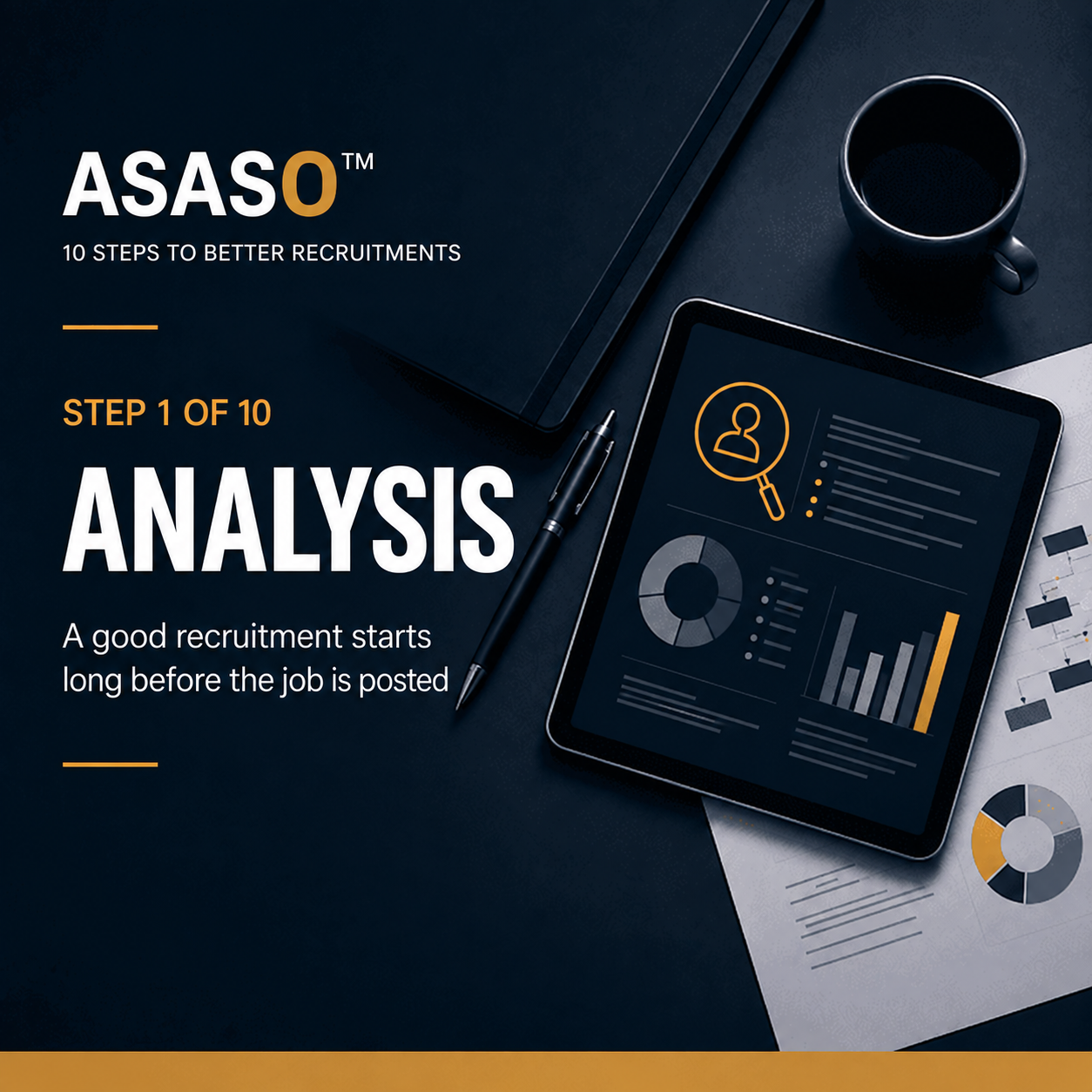
Analysis clarifies what you need. Advertising helps relevant people discover the opportunity. But advertisements have a limitation: they are most likely to reach people already considering a change.
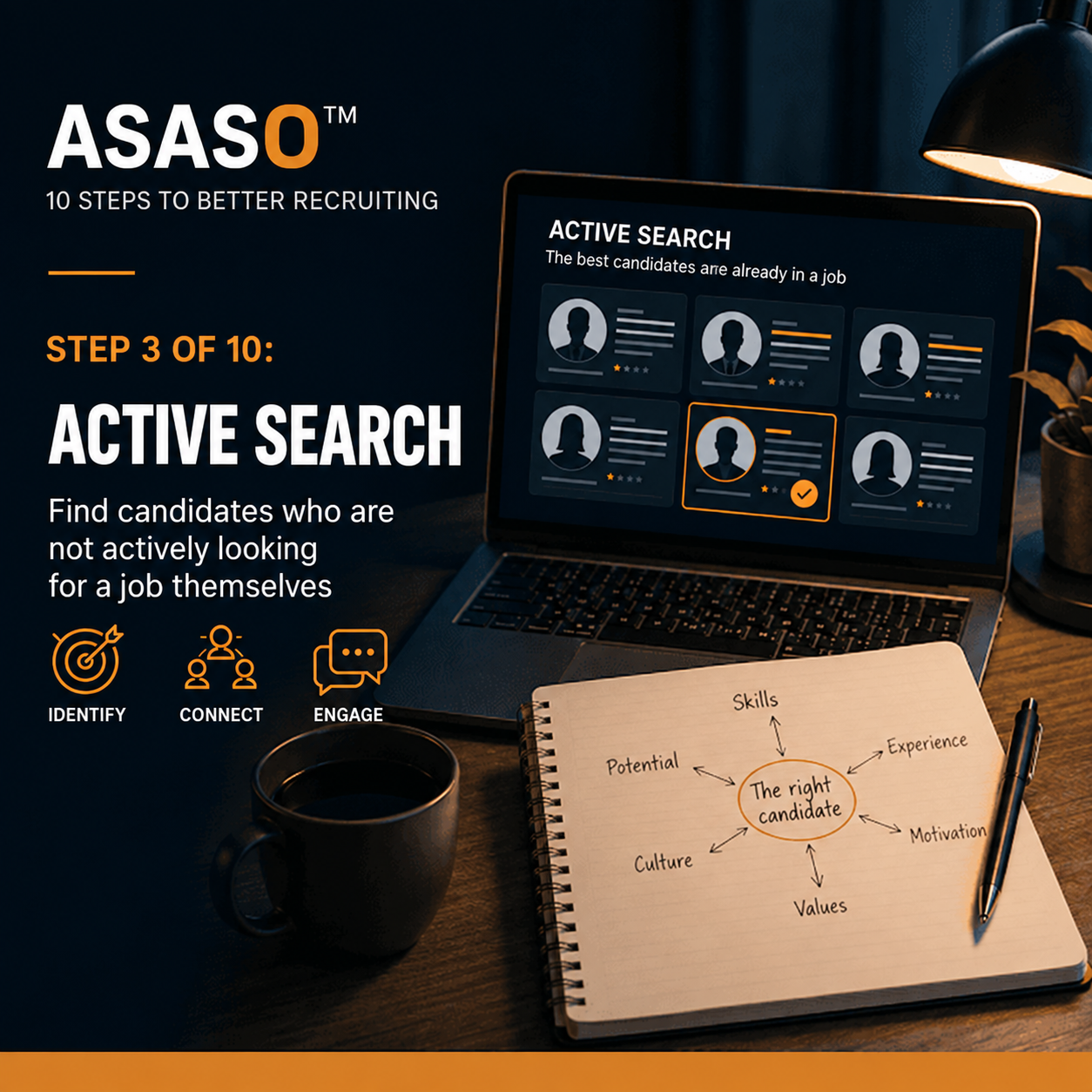
The third step in ASASO™ is active search. Often called headhunting, it involves more than sending messages. It means identifying people likely to succeed, understanding what may interest them and presenting a relevant opportunity.
Do not rely on applications alone
Many capable people are developing, contributing and finding meaning in their current roles. They may not spend time searching job boards. That does not mean they would never consider something different.
A professional, relevant approach can begin a conversation. The recruiter must take the first step rather than wait for an application.
Search is different from marketing
Advertising makes a role visible, and marketing increases its reach. Videos, articles and employer communication can strengthen interest.
Active search identifies particular people and approaches them personally. Some value technical challenges; others want influence, flexibility, development or a different leadership environment. Relevance depends on the person, not just the vacancy.
Research before approaching
The analysis from step one guides the search. Define the target capabilities, map relevant organisations, identify possible candidates, use appropriate databases and professional networks, and prepare a considered first message.
This systematic work distinguishes professional search from indiscriminate contact.
Contacting large numbers of poorly matched people creates activity but can weaken credibility. Precision matters. A small, well-researched group is often more valuable than a large list of unsuitable names.
Each conversation should respect the candidate’s time. Reputation and relationships develop over many interactions.
Build curiosity before asking for commitment
The first approach rarely needs to produce an immediate application. Its purpose is to establish whether a useful conversation is possible.
As the candidate learns about the role, manager and culture, the recruiter learns about their ambitions, expectations and motivation. Both can then assess whether further discussion is worthwhile.
A credible account of the organisation helps. Unclear or exaggerated employer messages make the approach harder to trust.
Technology supports the human work
Search tools, databases, social platforms and AI can help identify relevant experience. They do not by themselves establish what a person wants next or whether the opportunity fits their life.
That understanding develops through dialogue. Active search combines research with relationship-building and communication.
ASASO™ certification explores defining a target group from the job analysis, researching through relevant channels, distinguishing search from marketing, adapting communication, using supporting material and protecting the organisation’s reputation.
The next step is screening: deciding which candidates warrant further assessment using clear, shared criteria.
English editorial adaptation of the Norwegian original.
Bring the ideas into your organisation.
Talk to us about your leadership, team or recruitment challenge.
Book a conversation ↗